I didn’t expect to find olive trees in a desert. And certainly not in the driest non-polar desert in the world.
But Chile’s Atacama Desert would surprise me in many wonderful ways on a week-long adventure with local tour operator Trekking Aymara.
Landing in the coastal city of Arica, our small group (one American, one Brazilian and one Canadian), meets the indigenous men who will drive and guide us; Alvaro Mamani– who founded Trekking Aymara to give guests insight into his culture while exploring some of the most spectacular landscapes on the planet – and his English- speaking guide, Santiago Tamani.
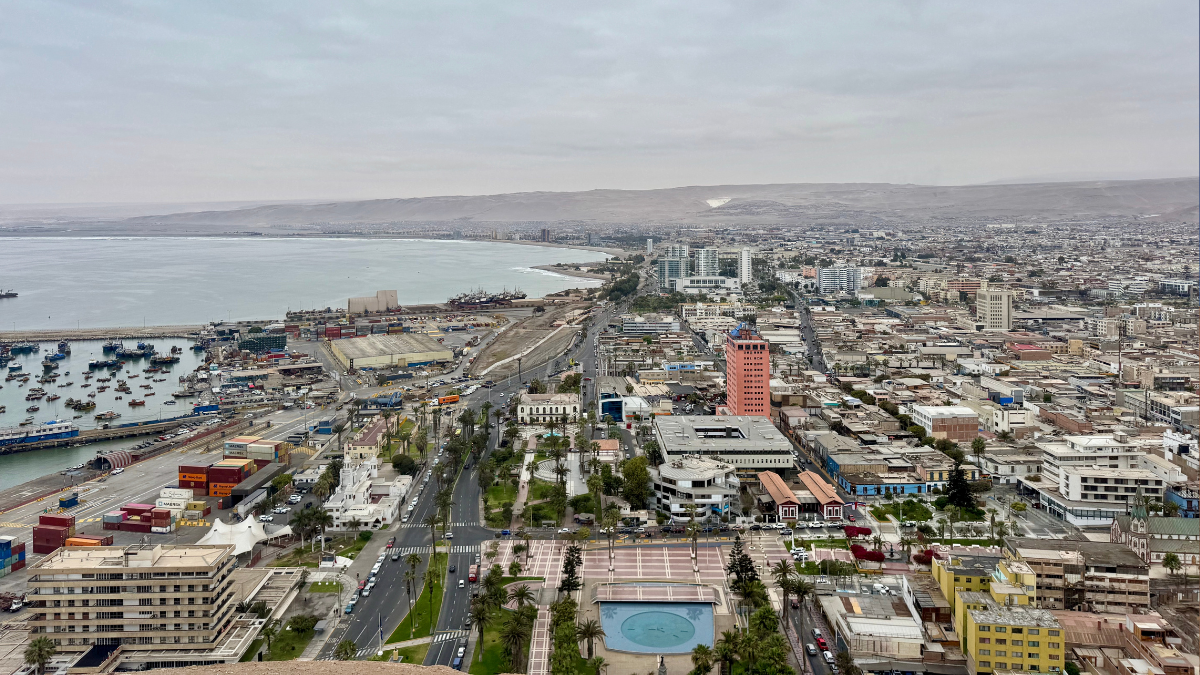
“It never rains here,” says Santiago, as we stand on a clifftop overlooking the city which appears largely colourless save for a few palm trees.
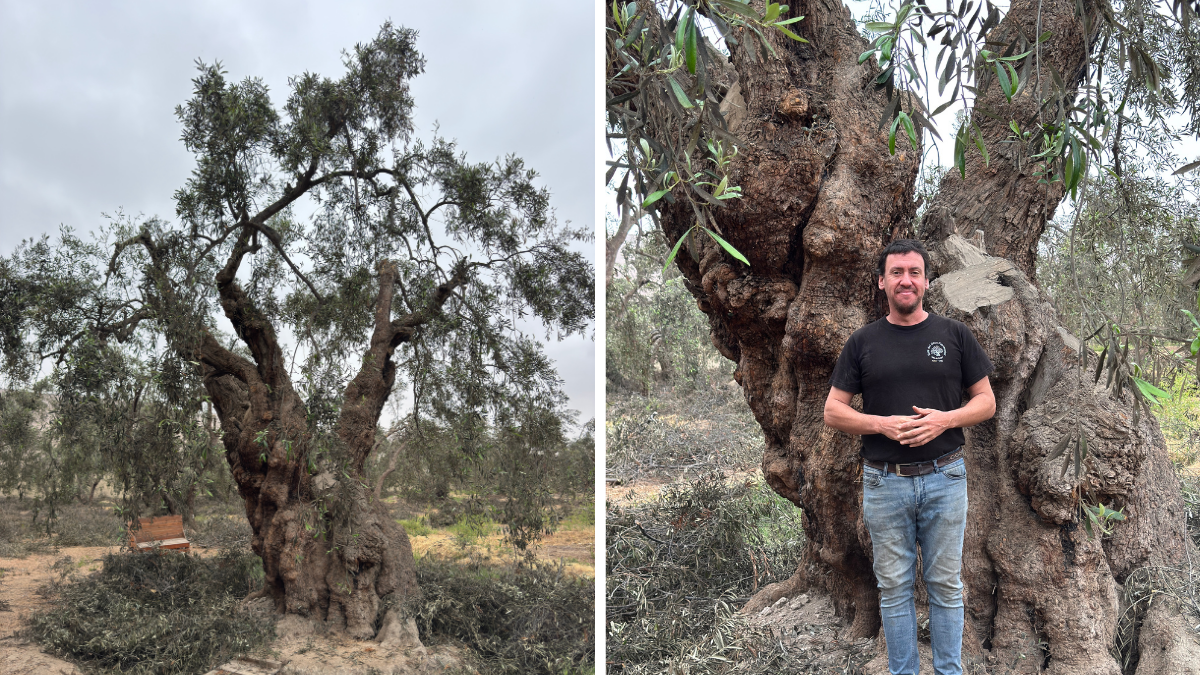
Yet just a few kilometres away, fruit trees, vegetables and greenhouses fill a fertile oasis between mountains of sand. It’s here, in the Azapa Valley, where we taste olives and walk through an orchard of olive trees that were first planted by Spanish colonizers to provide oil for church lamps and silver mines.
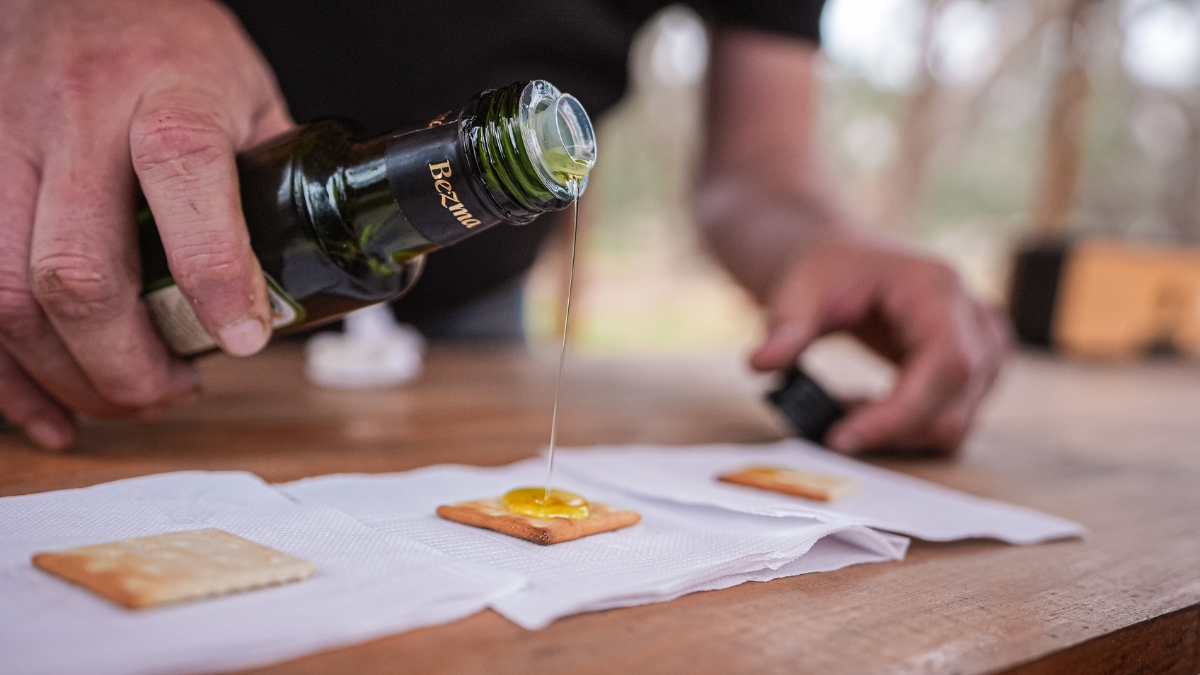
Almost 500 years later, these trees are a part of Chile’s cultural heritage. Bezma farm manager Ignacio Sanhueza proudly introduces us to the grandaddy of them all - El Señor de Ocurica – planted around 1579 and still producing.
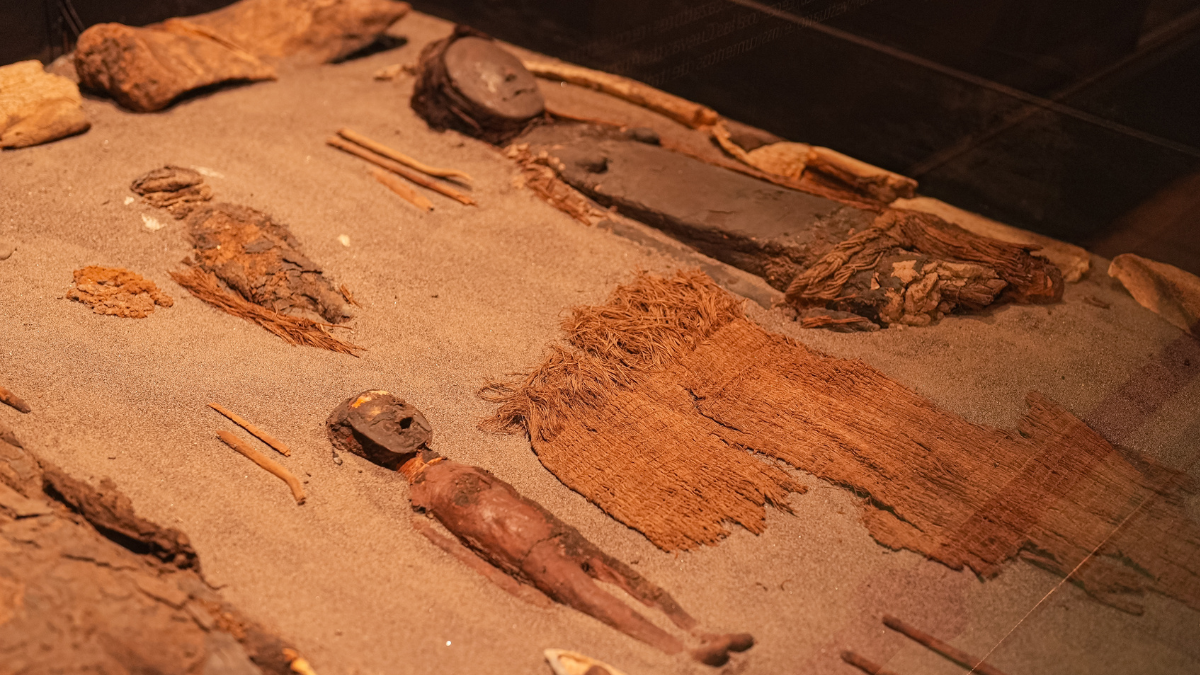
If that seems old, it’s nothing compared to what remains of the much earlier Chinchorro culture. At the Archaeological Museum of San Miguel de Azapa, we gaze in awe at 7,000-year-old mummies. These ancient people left behind the world’s oldest known artificially mummified human bodies, as well as naturally preserved ones. A new study suggests they began this practice to mourn infants who died, then kept their mummified remains with them.
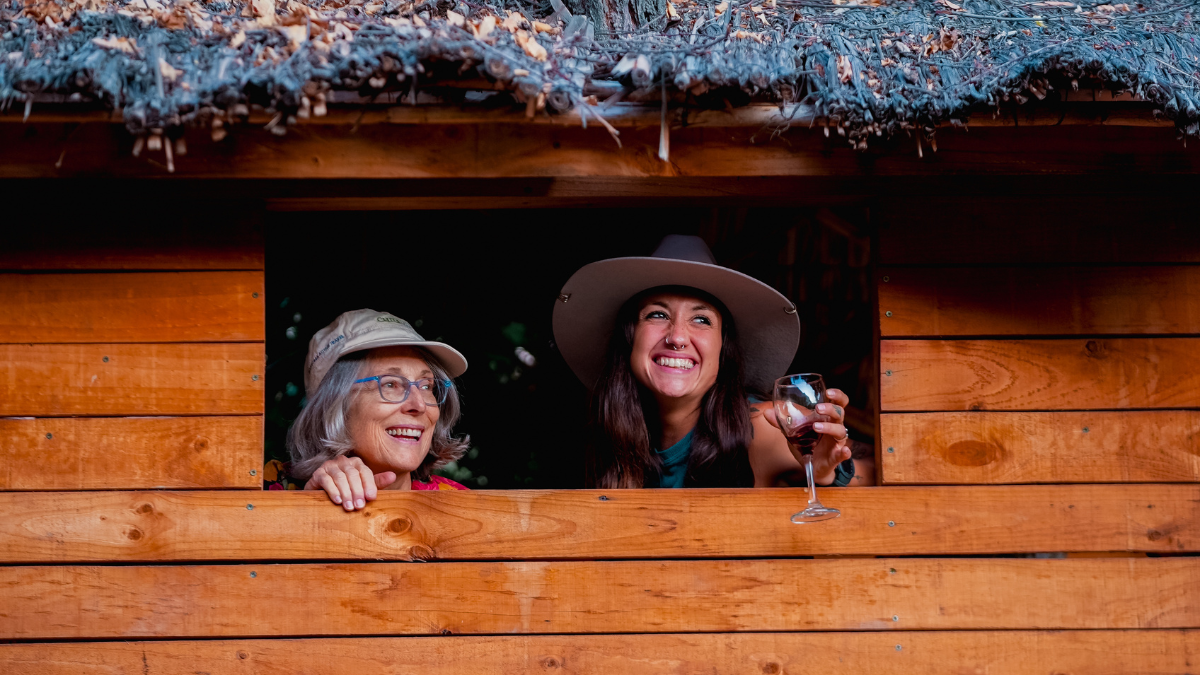
Driving inland, we experience the sensory delights of a more recent cultural tradition in the village of Codpa. In her tasting room inside a verdant canyon, Ayde Montesinos pours us glasses of ruby red Pintatani. It’s a wine she makes from grapes introduced by Spanish priests more than 400 years ago.
“Only men stomp the grapes,” explains Santiago as we sip the Pintatani and learn that this is one of the few places where you can find it.
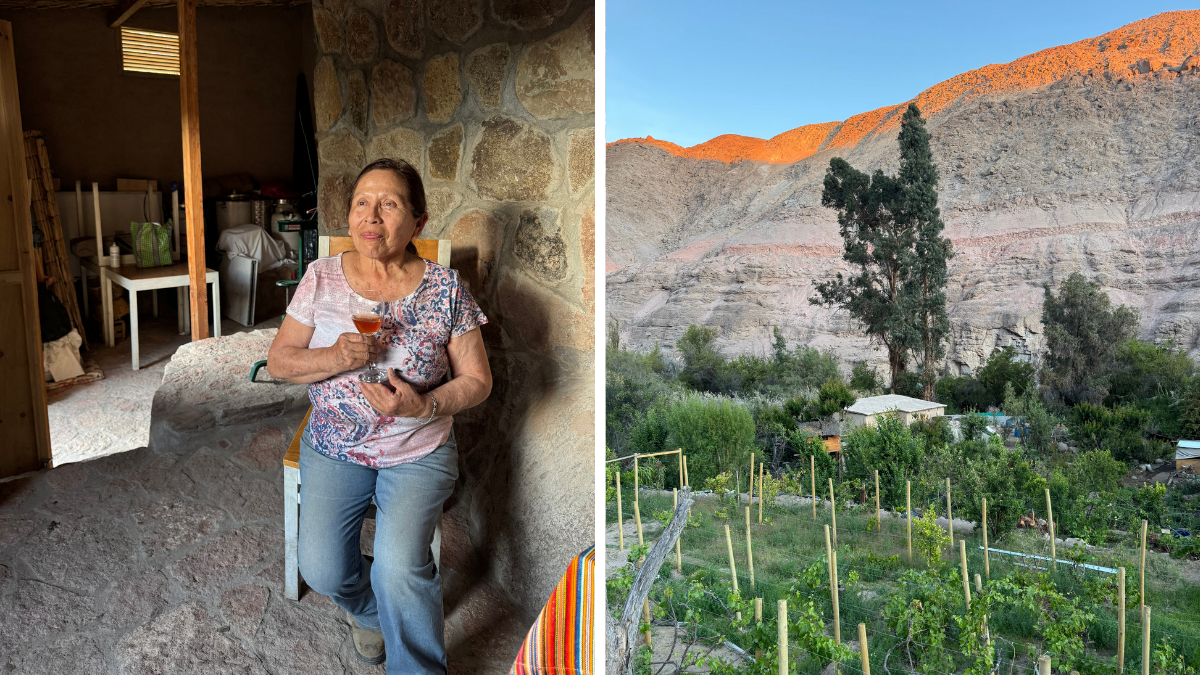
Ayde and eight other producers have been trying to get their wine recognized by the Chilean government so it can be sold in stores, but its alcohol content – 18 to 20 percent – is prohibitively high. Instead, people come here from all over Chile in May to celebrate the harvest and throughout the year to enjoy it.
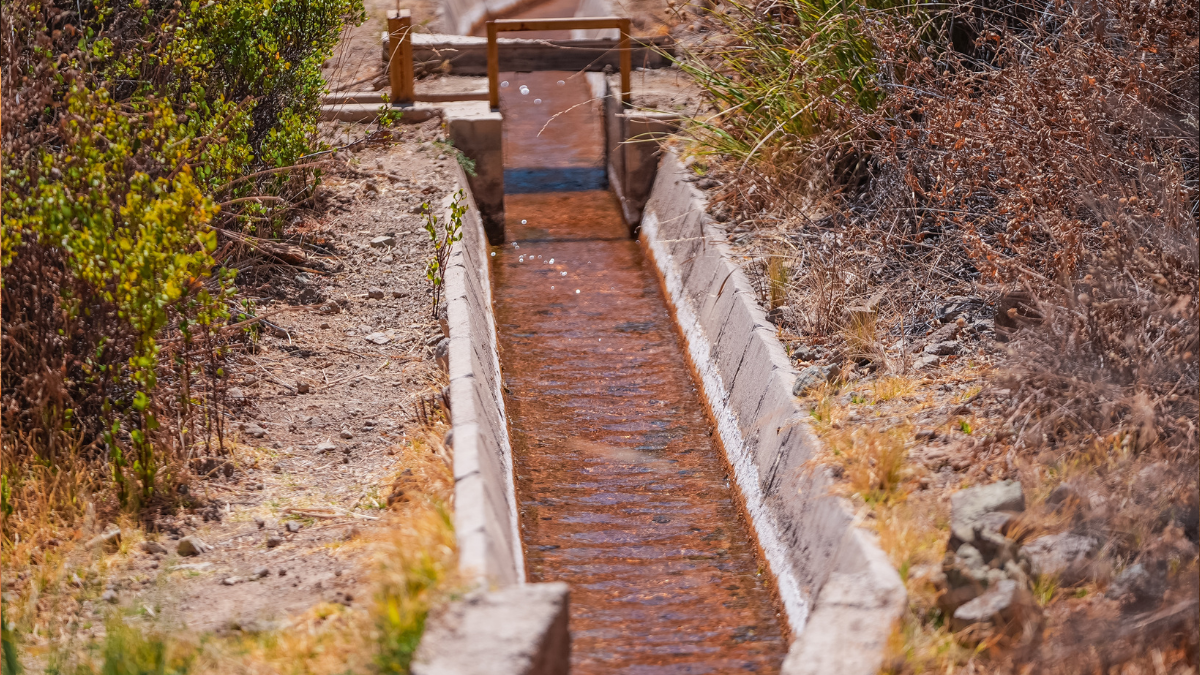
A couple days later we meet another industrious indigenous woman – Adelaida Marca Gutierrez. She’s wearing bright red lipstick and dangly yellow earrings when she greets us on her gently sloping hectare of land outside Socoroma, 3,500 metres above sea level. Adelaida grows oregano without chemicals and with water channeled from snow melt in the Andes, the same as her parents and grandparents did before her.
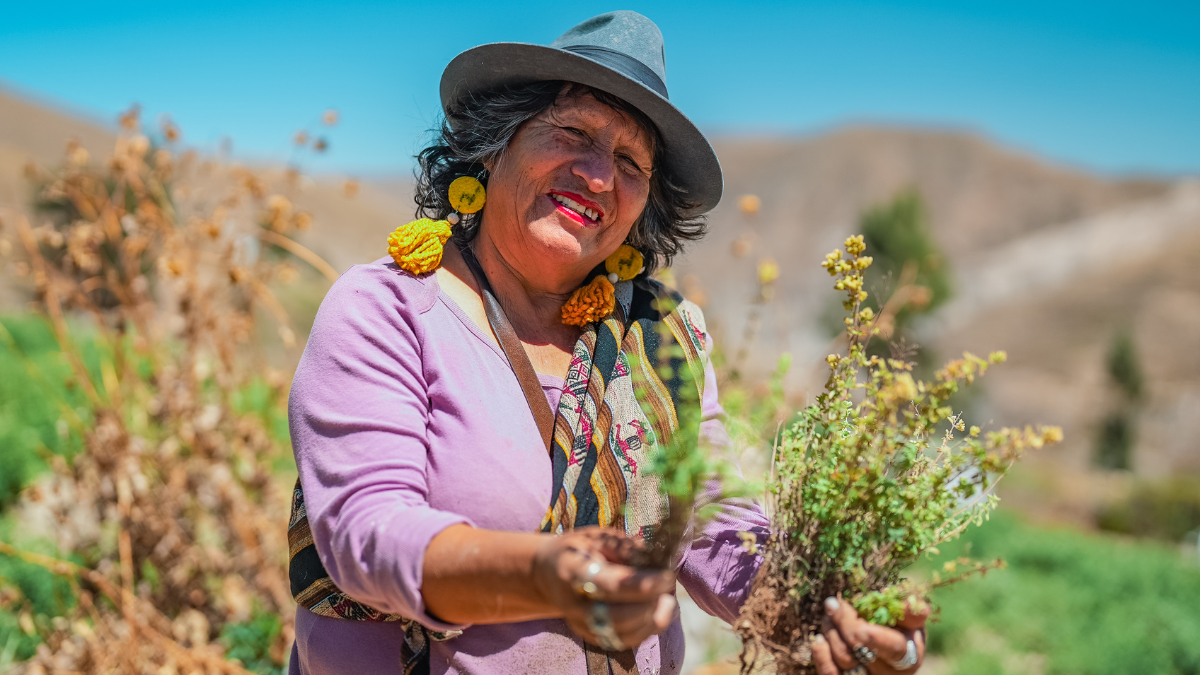
“Our product is good because of the geographical location,” she says in Spanish, extending a bouquet of fragrant leaves and tiny flowers under my nose. “It does not occur anywhere else with the same characteristics.” Gutierrez sells mostly dried oregano at markets but her finest grade she reserves for some of Chile’s top chefs.
On our fifth morning we’re up before the sun to have breakfast with a llama and alpaca herder. Leaving our hotel in Putre, we pass herds of grazing guanaco – the wild ancestors of llamas – before reaching Conrado Blanco’s estancia high in Chile’s altiplano.
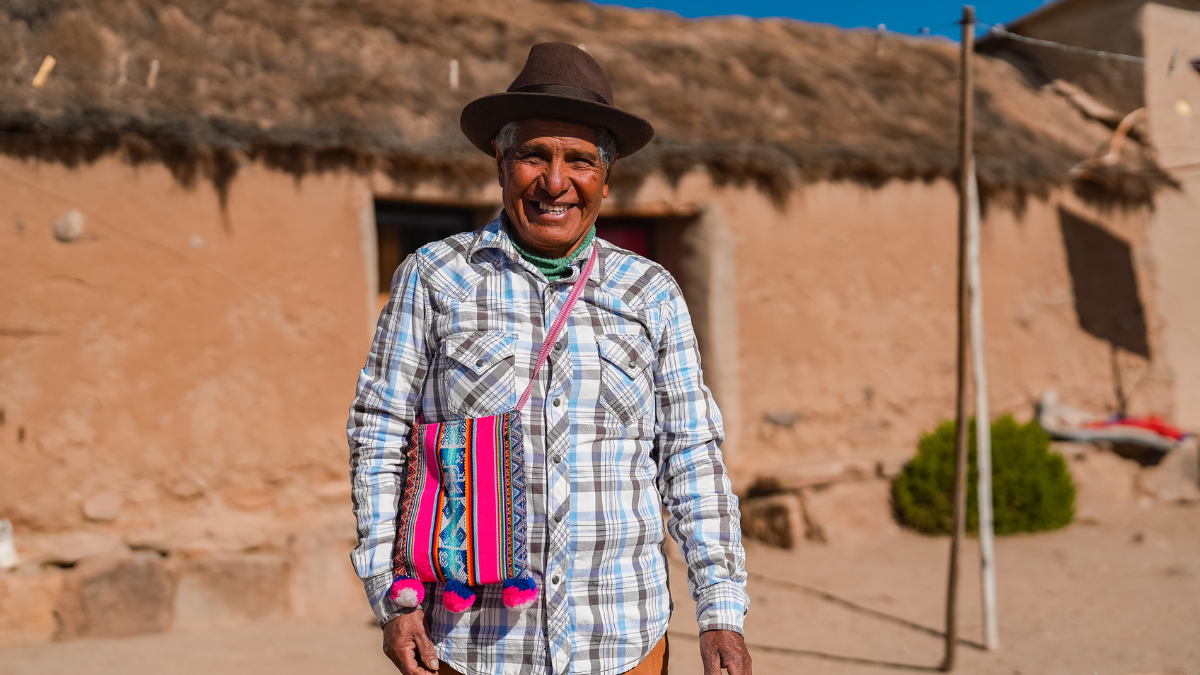
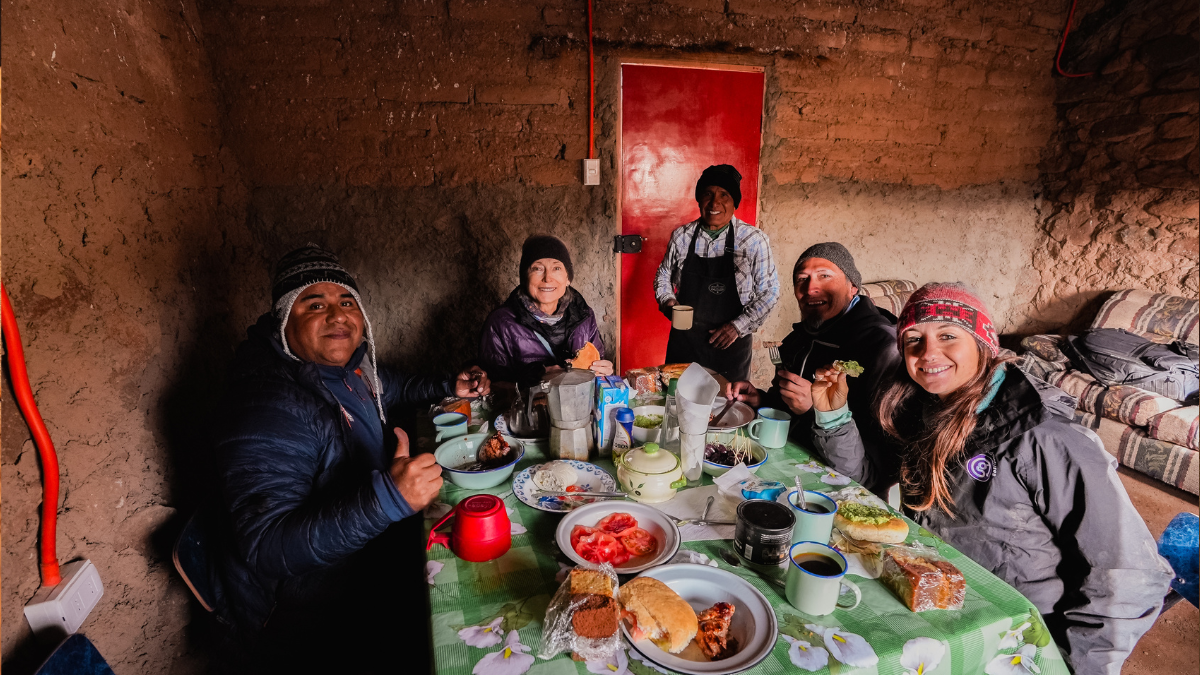
The sprightly 79-year-old greets us in the courtyard of his adobe dwelling and invites us inside for boiled eggs, olives, tomatoes, avocado and roasted alpaca meat. Surprisingly, Conrado also serves the best tasting coffee we’ve had all week, made on a stovetop Italian coffee maker. Who would have thought that a llama herder living two hours from the nearest town, would own a Moka pot? Not me!
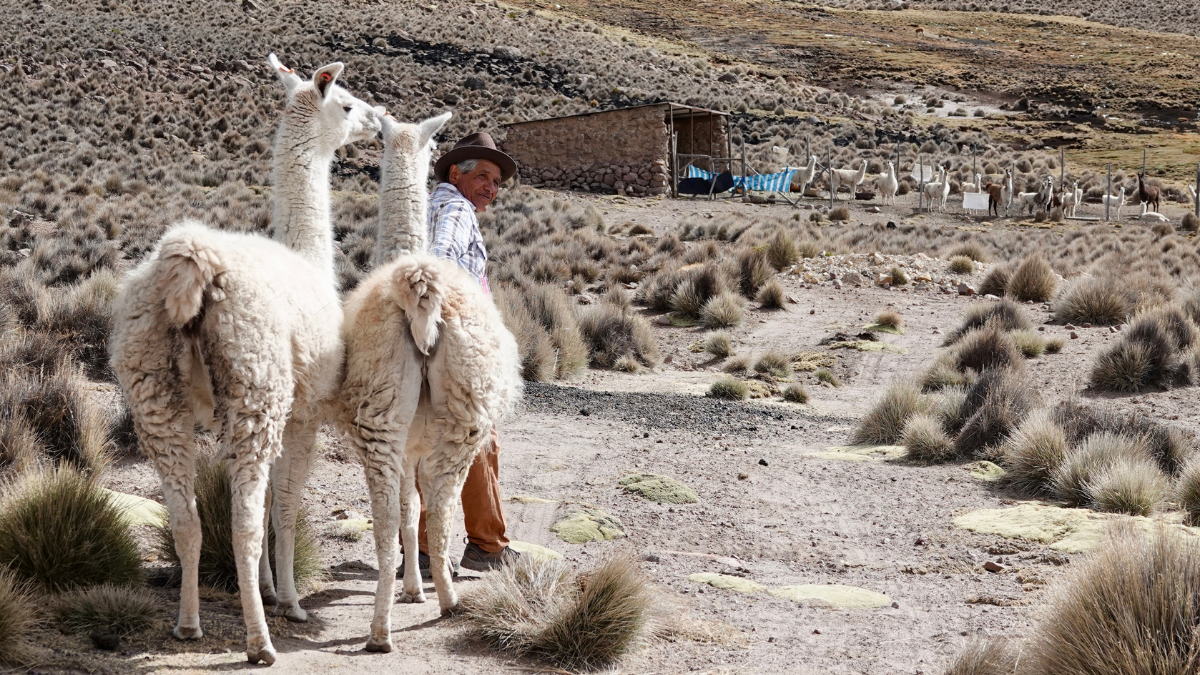
Later, when we go to the corral, we get another surprise. Two of his 700 llamas are unfenced and come galloping towards us at full speed. Within seconds, the only thing between my face and the hairy nose and lips of one llama is my phone as I try and record the encounter. Turns out these two are pets, bottled-fed by Blanco after their mother rejected them.
By now, we’ve mostly acclimatized to the high altitude and we’re ready to hike through one of the most stunning landscapes you can imagine.
Picture this – a snow-capped volcano overlooking a large lake with wild vicuñas grazing peacefully in the foreground. This is Lauca National Park and incredibly, no one else is here.
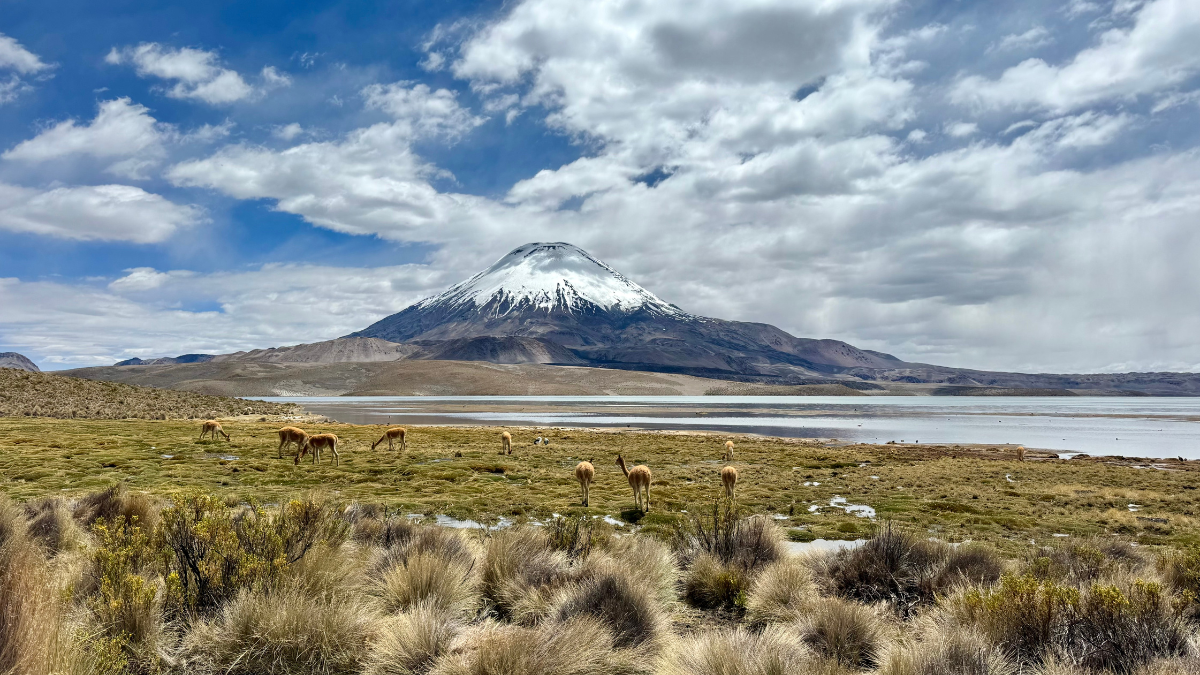
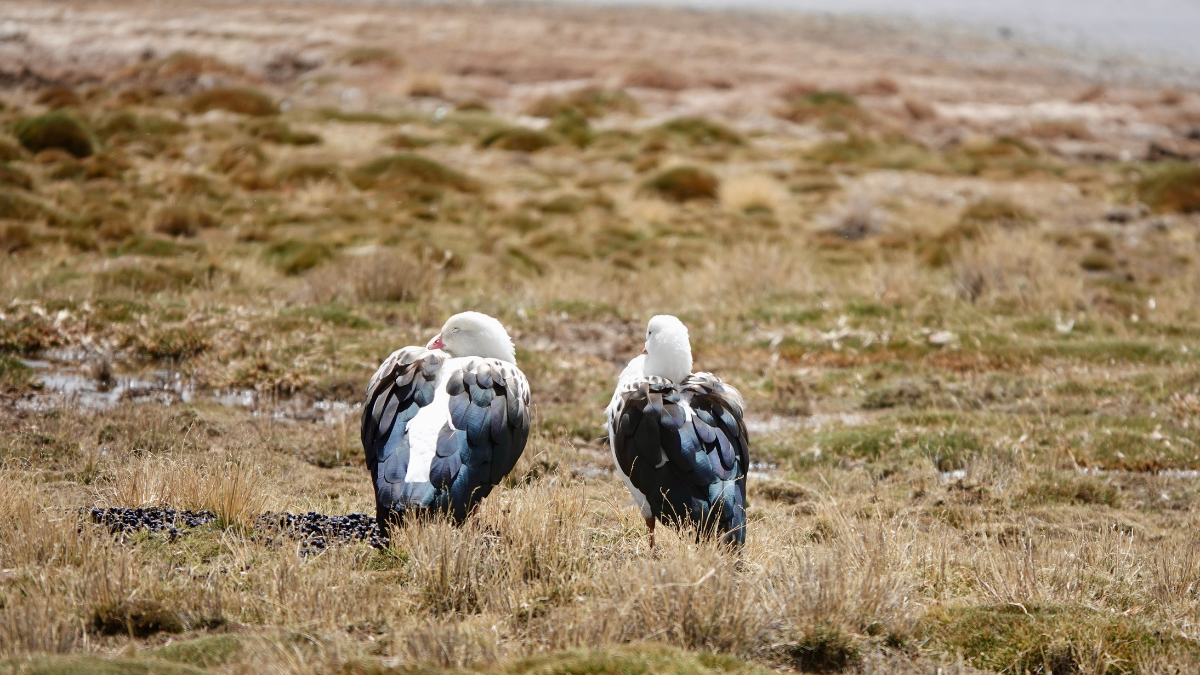
In ten kilometres of walking mostly flat trails we don’t meet another person, only wildlife. Viscachas – rabbit-like rodents – lie on sun-warmed rocks. Water birds paddle leisurely on salty lagoons. A flock of flamingoes takes off before us, their tangerine feathers aglow in the sun.
That night, soaking in an outdoor hot spring, we admire a dark sky dotted with stars and count our lucky ones.
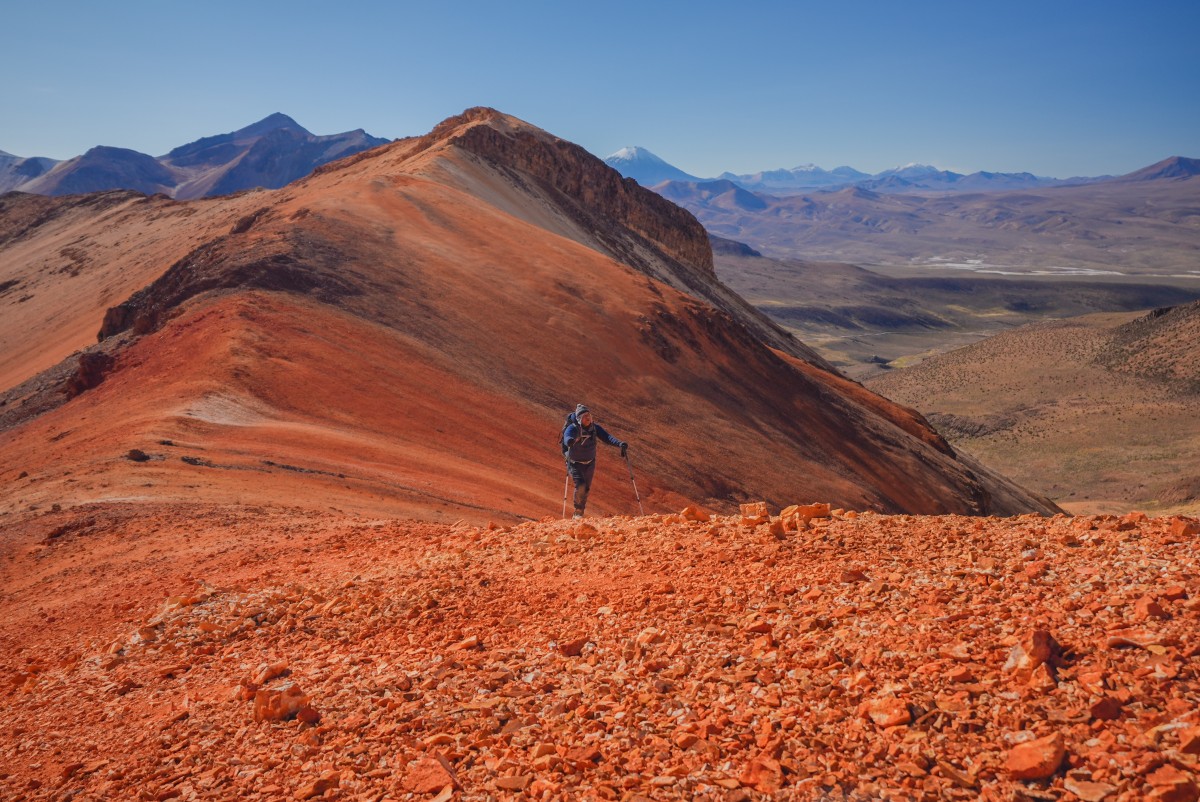
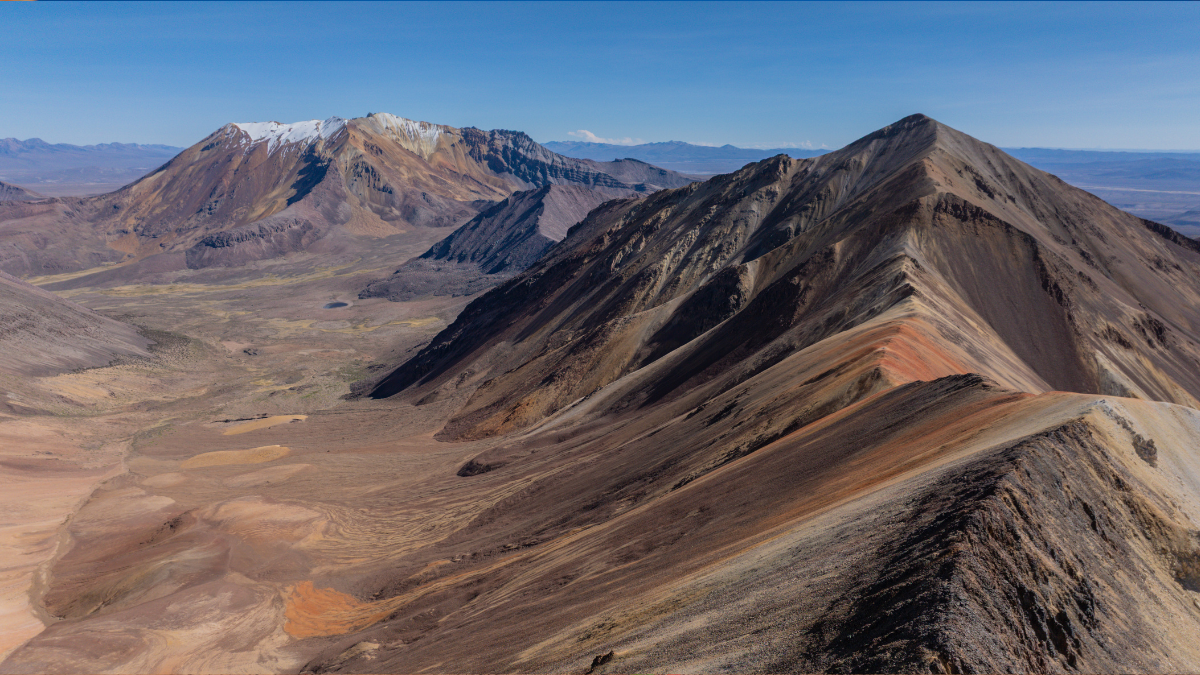
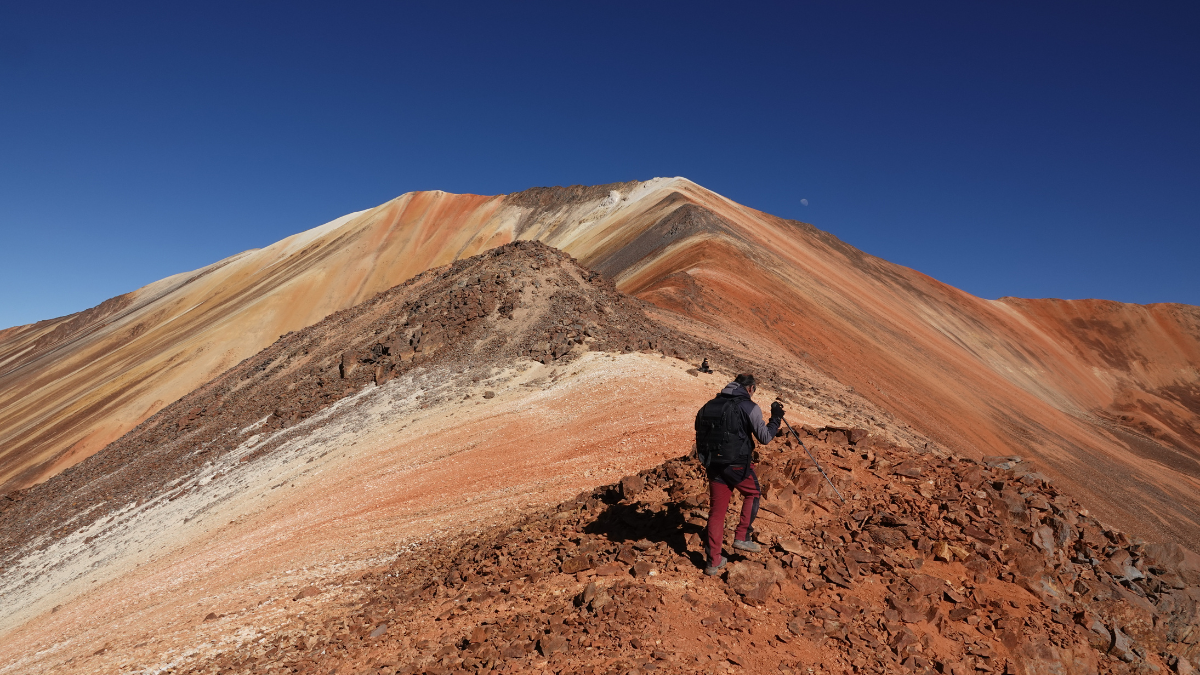
On our penultimate day we drive higher still, to the Suriplaza Rainbow Mountains where vibrantly coloured volcanos soar more than 5,000 metres.
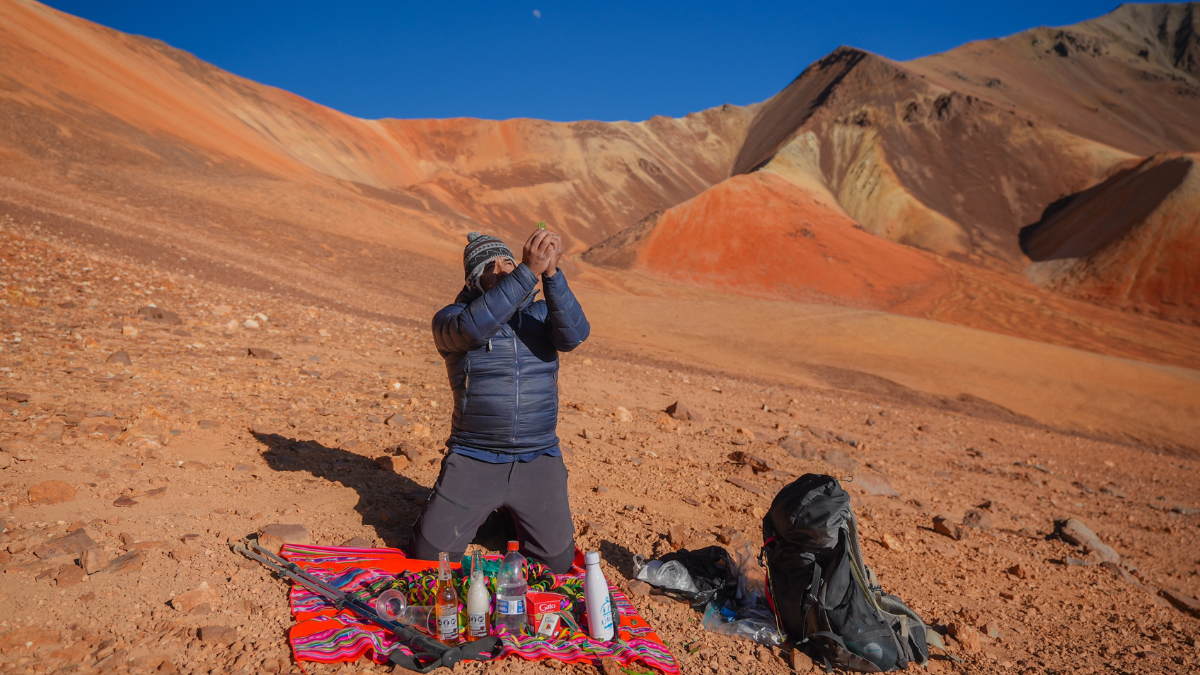
We hike first to a plateau where Alvaro spreads a blanket, sinks to his knees and performs a Pawa – an Aymara ceremony to thank Pachamama with food and drink.
“You make an offer,” Santiago explained earlier. “You give and then you receive. “Reciprocity always.”
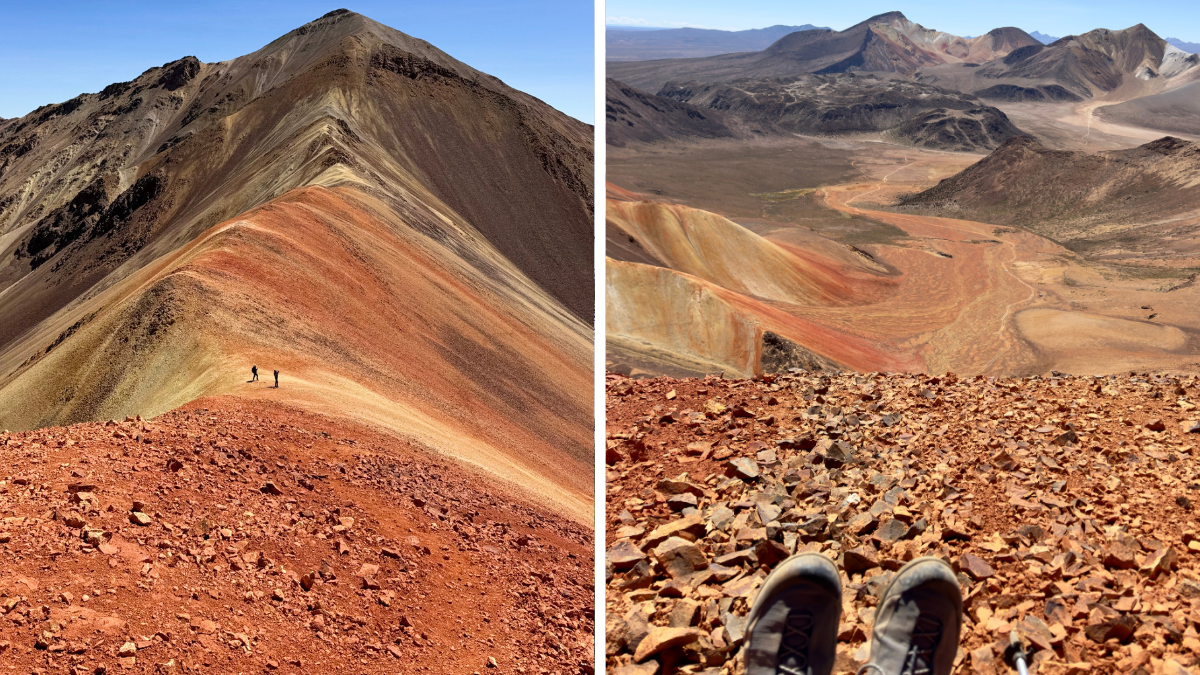
When we begin climbing again, I go slowly up one spine of the volcano, not just for safety, but to memorize the regal hues; burnished gold, white silver and red copper.
From the summit, I see a windswept valley the colour of a cappuccino. I feel sharp stones underfoot and hear sublime silence. I understand that, like the Aymara, we’ve made an offering. We’ve given our time to visit this remote place, and our trust to Aymara Trekking to bring us here safely and back.
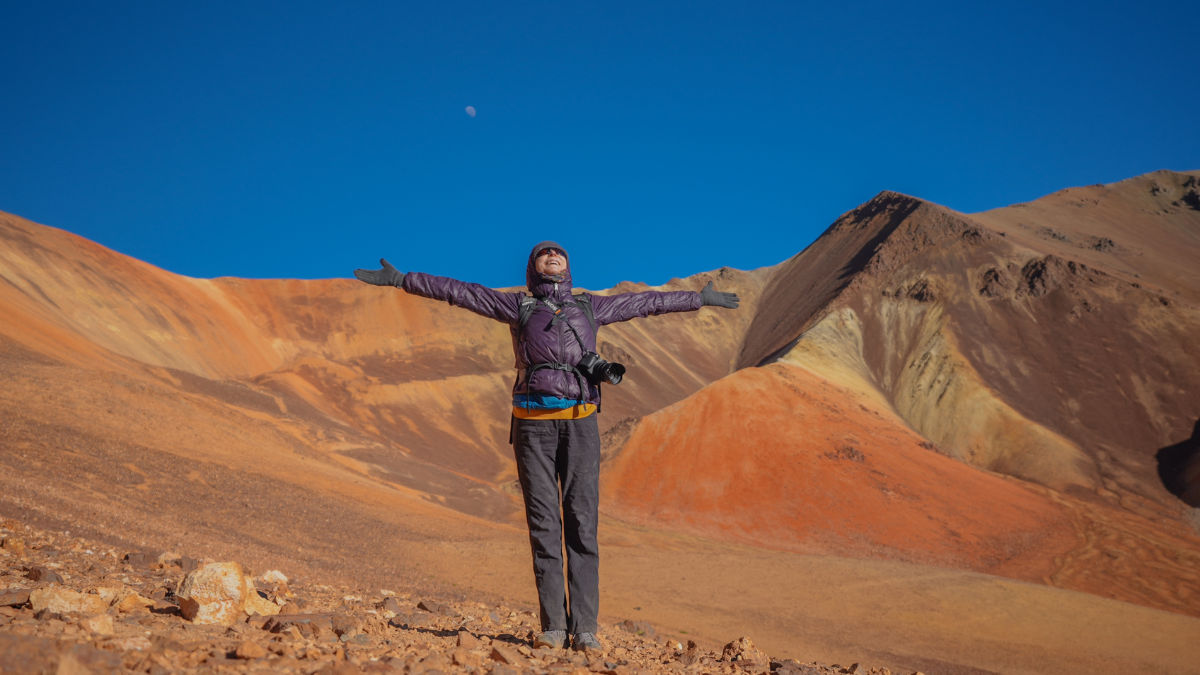
In return, we’ve received the gifts of awe and wonder from the natural world, and food and camaraderie from people we now call friends.
The writer was a guest of Trekking Aymara. It did not review or approve the story.
About the Storytellers
Writer & Photographer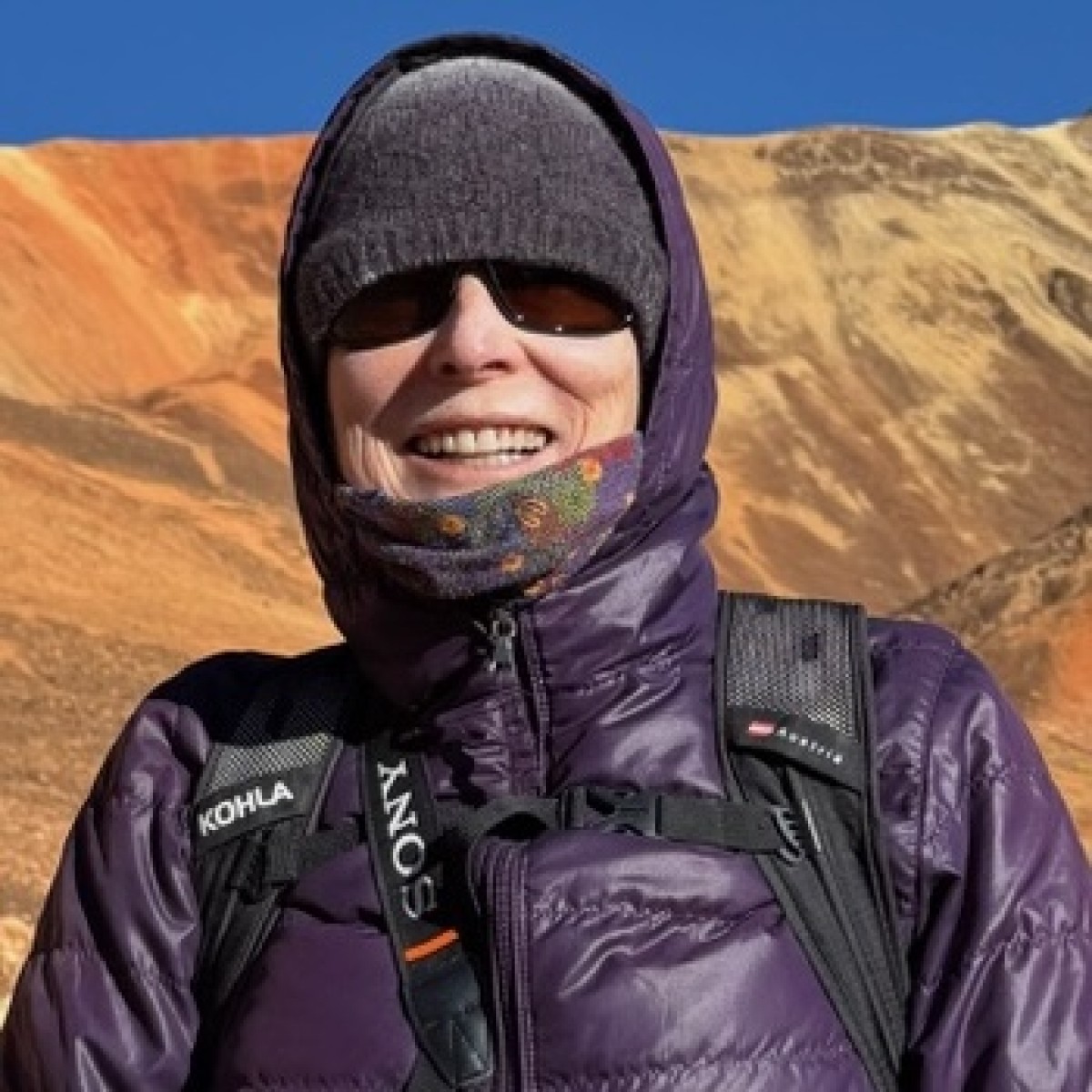 Suzanne Morphet is a journalist who transitioned from reporting news for the Canadian Broadcasting Corporation (CBC Radio) to writing about travel. Her stories focus mostly on outdoor adventures with companies that honour the needs of local communities and inspire travellers to make the world a better place. You can read more of her stories at suzannemorphet.com
Photographer & Videographer Pulse Filmes is an audiovisual production company specialized in expedition filmmaking. Working in remote and demanding environments, Pulse combines strong field production with a refined cinematic language and exceptional image quality. Each expedition is shaped into a visual narrative that places the viewer inside the journey — revealing the landscape, the movement, and the human connection that defines every exploration.
About the Tour Operator
 Trekking Aymara offers a variety of small group, multi-day tours in the Arica and Parinacota region of northern Chile. Guides are certified in trekking, mountain guiding and first aid. Tours start in Arica, at sea level, so you can slowly acclimatize to higher altitudes. LATAM flies to Arica from Santiago daily. Rates vary depending on the number of days and the itinerary.