Santo Antão, Cabo Verde's best-kept secret, offers an extraordinary hiking experience along ancient cobblestone trails carved into volcanic cliffs, past ghost towns and hidden valleys, where pink and turquoise houses cling above the Atlantic.
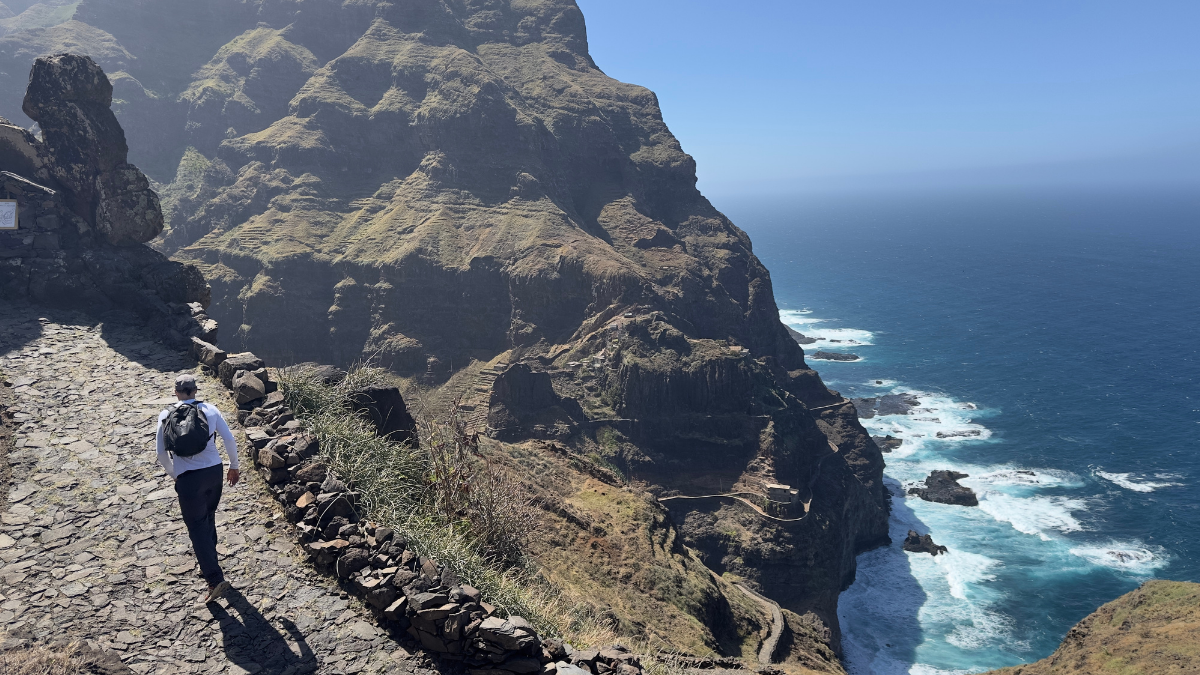
Silence.
There was something magical in the quiet experience of hiking a 15-kilometer trail, watching the vast blue Atlantic Ocean and listening to the waves crashing against the rocks some 200 meters below our feet. It felt as if the wind and the salt spray were whispering mantric songs of nature, inviting me to quiet my mind and simply live life step after step. After nearly four hours, absolutely enchanted by the Cruzinha–Ponta do Sol trail on Santo Antão, considered the hiking capital of the 10-island archipelago, I found myself in a state of pure bliss on what many call the most iconic coastal trail in Cabo Verde.
After navigating zigzagging stone trails through a vertical labyrinth of canyons — known locally as ribeiras — I emerge atop sheer cliffs that plunge straight into the Atlantic. I stop to take my millionth photo and smile at Tanya Perret, one of my fellow hikers sharing this once-in-a-lifetime experience, also gazing toward the endless blue horizon. “I’ve hiked the Himalayas for 25 years, the Alps for 30 years, and I can tell you Cabo Verde is up there — it really is a hiker’s paradise,” says Tanya, a UK tour operator and founder of Live Breathe Hike Tours. I can only agree.
That long, extraordinary encounter with the sea — and with myself — was just the climax of several days sampling some of the most iconic hiking trails in the Barlavento islands of Cabo Verde, the mountainous northern part of the archipelago. Our group of 14 adventure travelers from ten different countries would be surprised again and again by geographical wonders along the way. Santo Antão, in particular, had already proved why it is widely regarded as the premier hiking destination in the mid-Atlantic — and perhaps even in Africa. A topographical masterpiece of volcanic geology and imposing cliffs by the ocean, the island features an intricate network of stone trails connecting scenic ghost towns with bucolic fishing and rural villages.
A Robust System of Cobblestone Trails
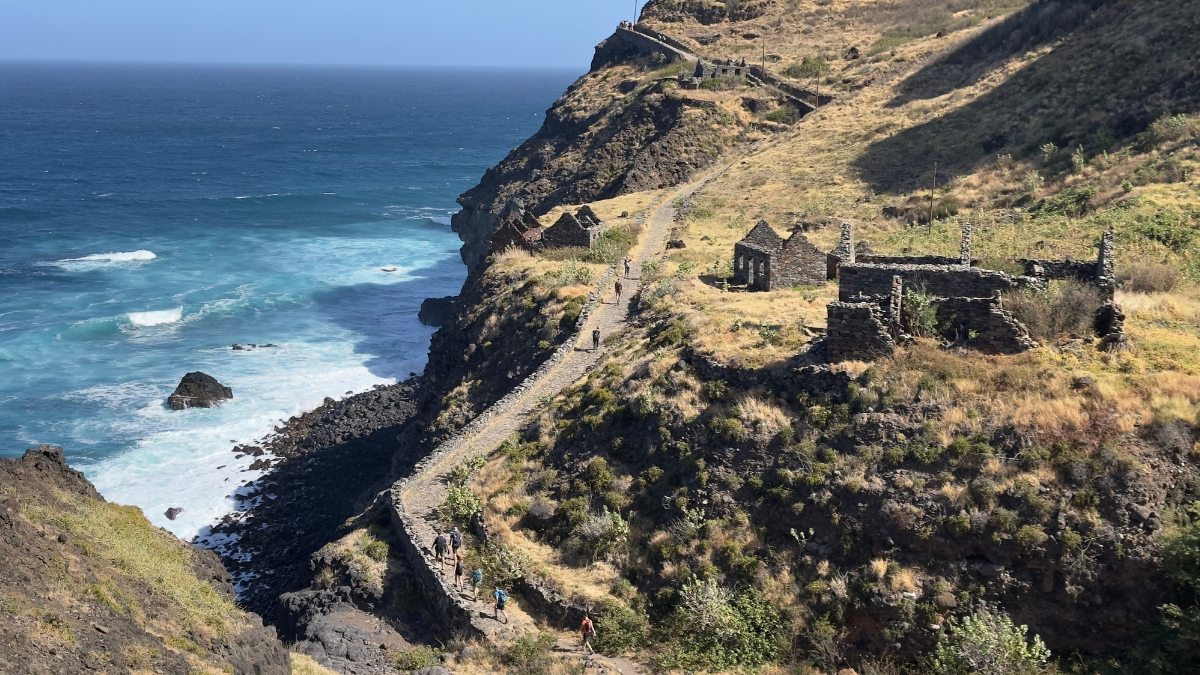
With over 300 kilometers (186 miles) of routes, Santo Antão boasts a robust trekking network ranging from accessible day hikes to demanding multi-day expeditions. Most impressive are the paths themselves: hand-laid cobblestone calçadas expertly engineered to traverse the island’s most rugged, vertical terrain. Built by local master stonemasons under colonial direction in the late 19th and early 20th centuries, these stones provided vital traction for livestock and functioned as ingenious retaining walls to withstand erosion during torrential storms.
These arteries connect volcanic craters and lush hidden valleys with arid, basaltic towers and dramatic coastal cliffs. Many of the island’s trails are self-guided, and travelers short on time often complete a round trip in a single day. That was not our case. We knew that the more we walked here, the happier we would be — and that the greatest challenge would be deciding which of the island’s 20 main trails to choose.
Read more about Cabo Verde:
~ São Nicolau: The Next Frontier
~ São Vicente: The Musical Land
Santo Antão does not look particularly large on the map: 43 kilometers (27 miles) long and 24 kilometers (15 miles) wide. But the scale becomes more imposing during our one-hour ferry crossing from Mindelo, on São Vicente Island, to Porto Novo, the capital of Santo Antão, once we approach the massive mountain range rising to 1,979 meters (6,493 feet) above sea level at Topo da Coroa. This dramatic ridge divides two very different landscapes: the lush northern valleys, where most of the country’s agricultural production takes place, and the stark, volcanic, almost lunar deserts of the south.
As most of us were newcomers to the island’s trail network, we opted for the classics. A van transferred our group from Porto Novo for an hour along the famous Estrada da Corda — the “rope road,” entirely paved with cobblestones — before dropping us at the rim of the Cova crater. This is the starting point of the famous Cova–Paúl Valley hike, a spectacular descent into the center of a dormant volcano that has been quiet for thousands of years. Completing the full 11-kilometer route to Vila das Pombas takes approximately five hours. Looking down into the flat bottom of the circular crater, there is no lava — instead, a patchwork of terraced fields spreads across fertile volcanic soil where locals grow potatoes, corn and beans.
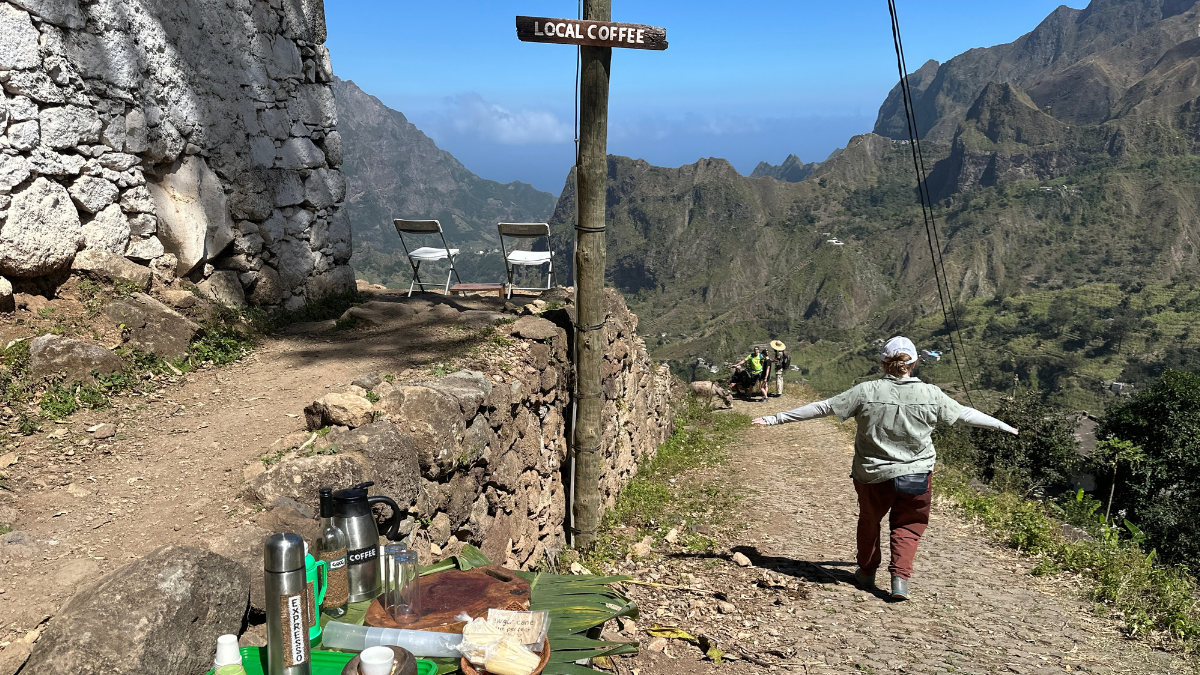
At one point along the trail we encounter a curious scene beside the path: a small table in front of what appears to be an abandoned house. On it sit a bottle of coffee, a jar of orange-and-passion-fruit juice and pieces of sugarcane. Next to them is a small container where hikers can leave money according to the simple price list. I pour myself a cup of juice, leave a few coins and continue down the trail, reflecting on how safe we feel in Cabo Verde. “I never once felt the need to look around to check if my bag was safe,” agrees another colleague, Dutch traveler Manon van Dilgt, a tour operator from SNP Natuurreizen — and, like me, already in love with Cabo Verde.
Murals, Cachupa and Grogue
From the classic Cova–Paúl trail there are several possible exit points. After about six kilometers, our group decides to finish in Cabo da Ribeira, a village whose walls are decorated with colorful graffiti, where an authentic national dish — cachupa — is waiting for us. “I spent three hours cooking corn, beans, pork, sausage and vegetables in a pressure cooker,” explains cook Margarida Souza. The day ends at the nearby trapiche Destilaria Dona Adélia, where we taste grogue, the local distilled rum made from sugarcane. With more than 40 percent alcohol content, the drink proves to be an excellent way to relax our tired legs after hiking.
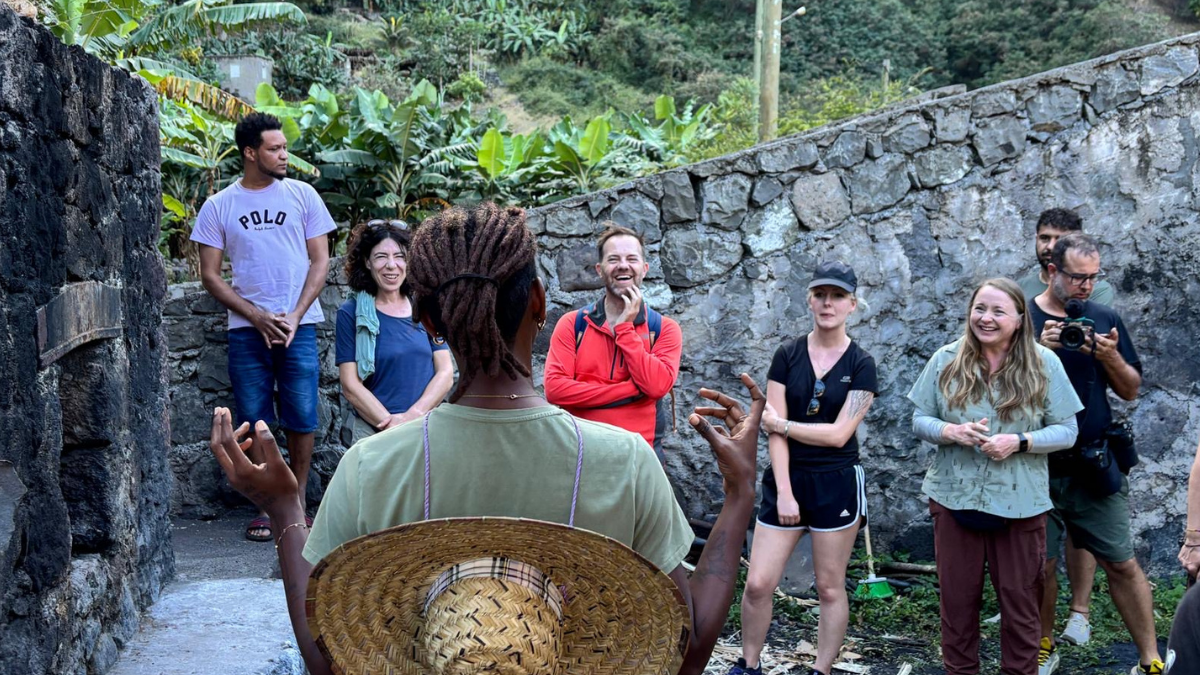
“Planning hikes in Santo Antão can be somewhat tricky,” Théo Lautrey had told me before the trip. A mountain guide from the French Alps who fell in love with Cabo Verde — and “with its people, its mountains and its music” — he moved here 25 years ago and founded Nobai, the local tour operator that organized our itineraries for the Adventure Travel Trade Association (ATTA). “Distances can be long, public transportation is limited, and it’s important to base your stay near the regions you want to explore,” he explained. Since our itinerary focused on the classic trails of the scenic Paúl Valley and the coastal route between Cruzinha and Ponta do Sol, staying in the island’s northeast was the logical choice. Ponta do Sol, Ribeira Grande, and Vila das Pombas serve as the primary hubs for hikers in this area. Two essential tips for first-timers: hire a local guide and arrange your pre- and post-hike transfers in advance.
Coastal Classic Trails and Summit Adventures
To explore another iconic coastal route in Santo Antão — the four-hour Tarrafal–Monte Trigo hike — it is more strategic to stay in the small fishing villages that give the trail its name, or at least closer to Porto Novo, in the southern part of the island. “It’s quite common for travelers to hike one way and then return by boat with a local fisherman,” explains guide Ivandro Gomes. “Sometimes they even spot dolphins or sea turtles along the way.” It is a simple ride in a small boat — one that can only be confirmed at the last minute depending on the sea conditions that day — but it is a memorable way to immerse oneself in the local “slow life.”
For experienced hikers, this trail can also be combined with a multi-day trek that includes the ascent of Topo da Coroa. French mountaineer Emmanuelle Radzynski recommends the challenge. Referring to the island’s highest peak at 1,979 meters (6,492 feet), she says it is one of the most rewarding hikes in the archipelago. The owner of French tour operator Allibert Trekking, she has visited Cabo Verde no fewer than five times. “I simply love this place and could come back many more times,” says Emma, who considers Santo Antão her favorite island.
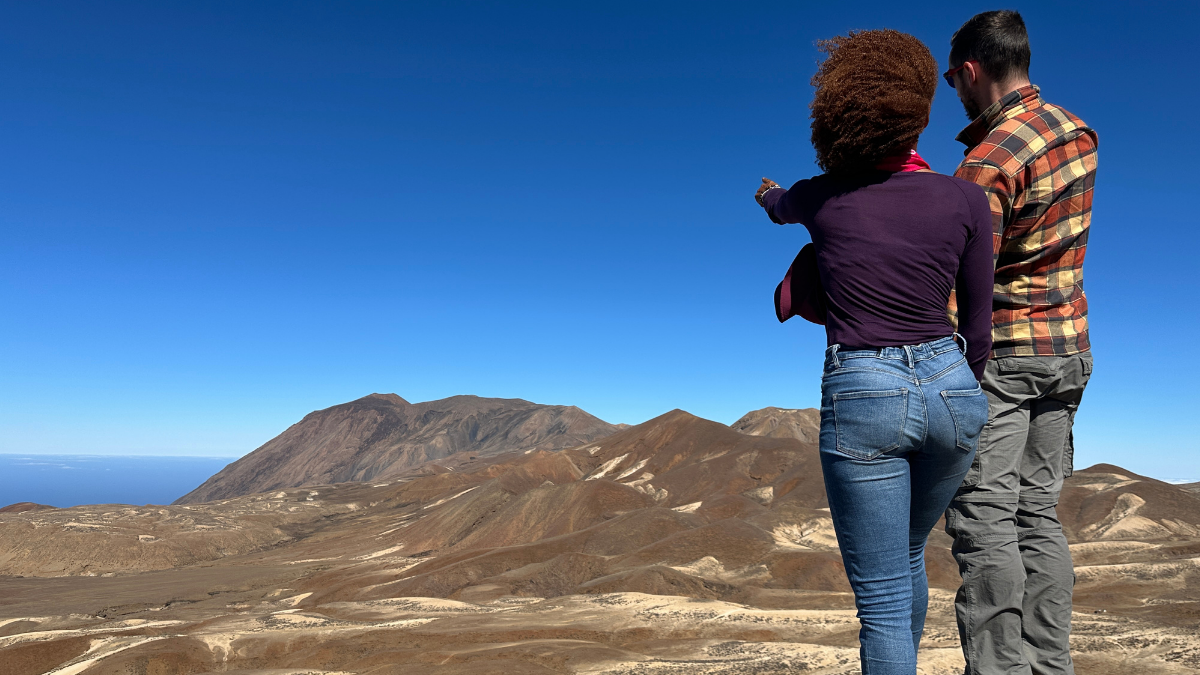
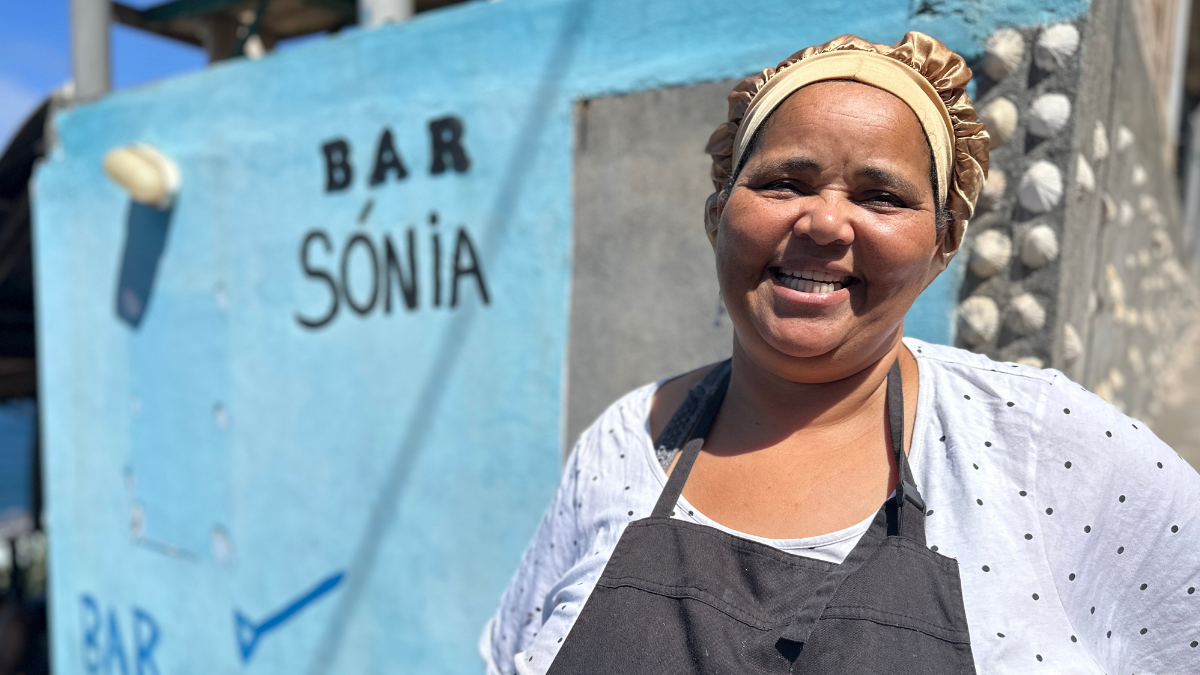
But the island’s ultimate highlight remains the Cruzinha–Ponta do Sol trail. Connecting the small fishing village of Cruzinha to a narrow path clinging to cliffs above the ocean for roughly 15 kilometers, the route enchants nearly everyone who walks it. Along the way we stopped for lunch in the isolated village of Formiguinhas (“Little Ants”). Cook Sónia Delgado enjoys chatting with visitors. “I have been serving snacks and lunches to hikers for 17 years,” she tells us. “And I’m happy that more visitors are finally discovering this paradise.” For dessert she serves a delicious camoca ice cream made from roasted local corn — which I strongly recommend.
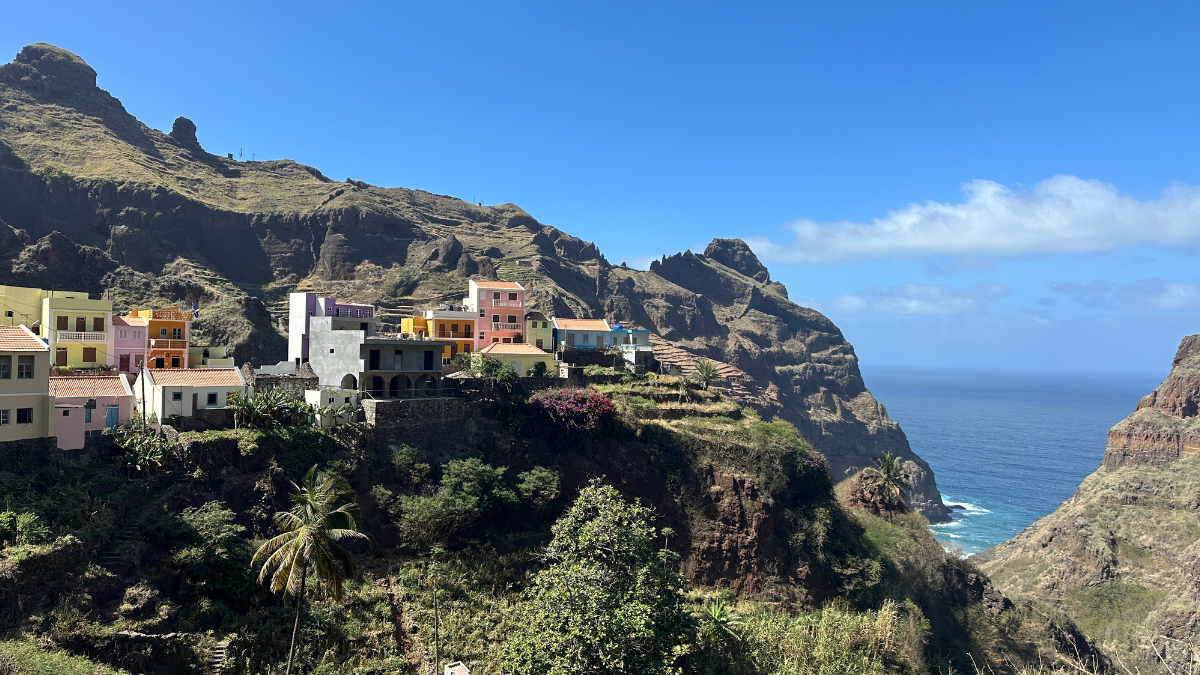
Later, during the final stretch of zigzags along the coastline toward the charming fishing village of Ponta do Sol, we round a sharp bend in the stone path and suddenly the spectacular village of Fontainhas appears across the ravine. Houses painted in vibrant shades of pink, turquoise and ochre seem to cling impossibly to the cliffs above the sea. “What is the best thing about living here?” I ask Claudine Dias, a smiling woman who offers me a cup of coffee filled with morabeza. “Besides having one of the most beautiful views of the Cabo Verde sea,” she says, “I love the silence.”
I smile and leave her without answering, listening only to the whisper of the wind and the distant echo of Atlantic waves crashing far below.
About the Storyteller
Writer & Photographer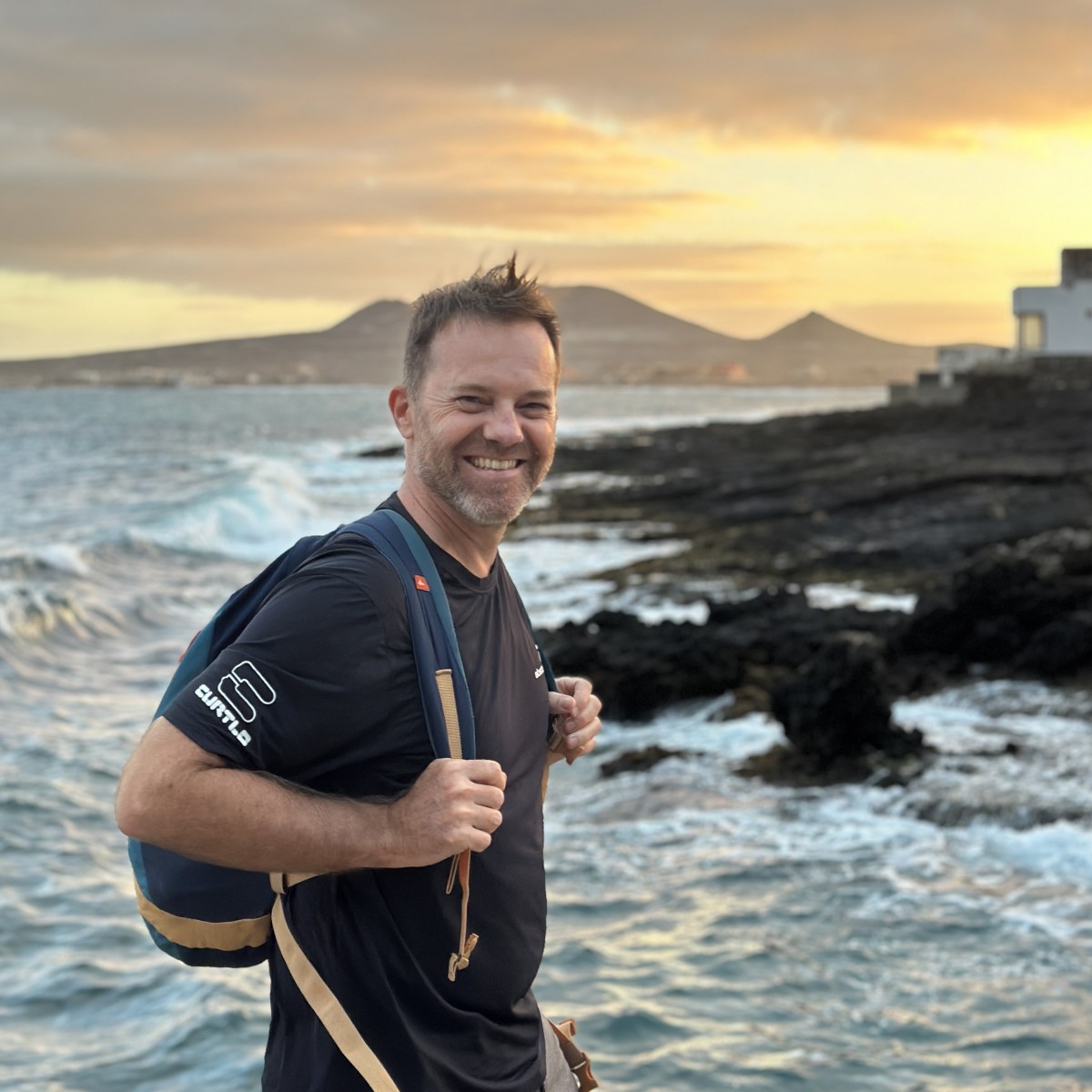 Travel writer Daniel Nunes specializes in human stories focused on conscious adventure and cultural diversity. He served on the ATTA Storytelling Team for the Adventure Travel Cabo Verde series in February 2026. Check out his website at danielnunes.co and follow him @danielnunes.co on Instagram.