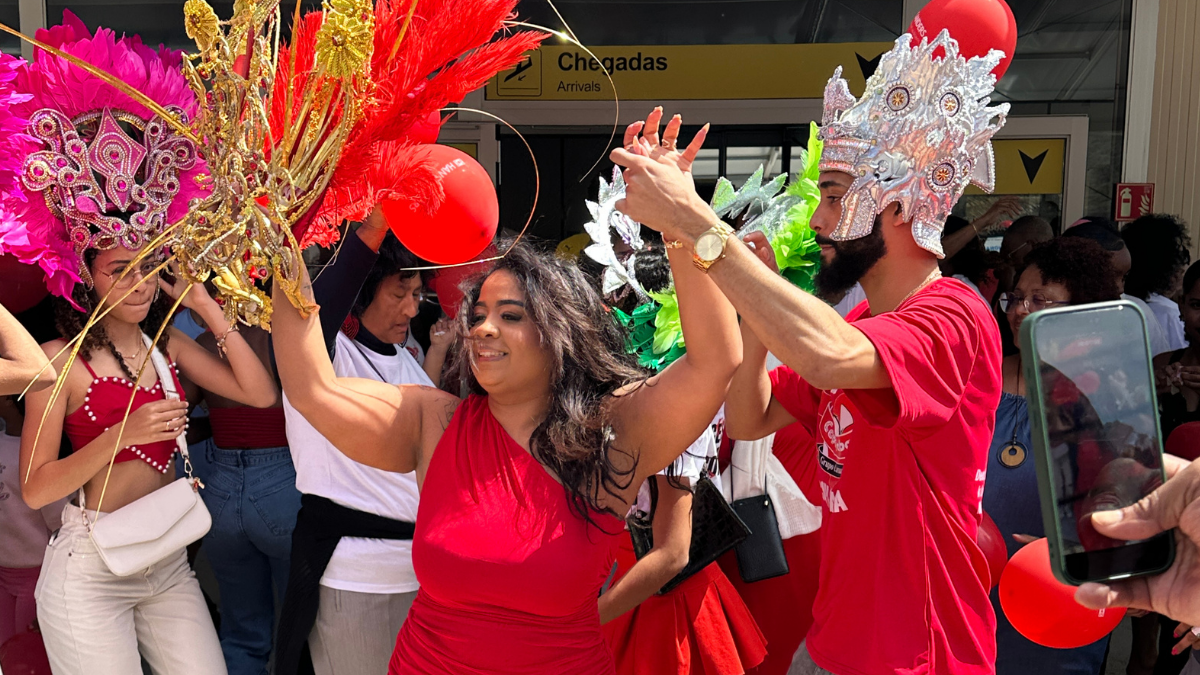
Some journeys begin before you even take the first step. On one of Cabo Verde's least-visited islands, a group of hikers stepped off a tiny plane and into a spontaneous Carnival — drums pounding, dancers swirling around a makeshift king and queen.
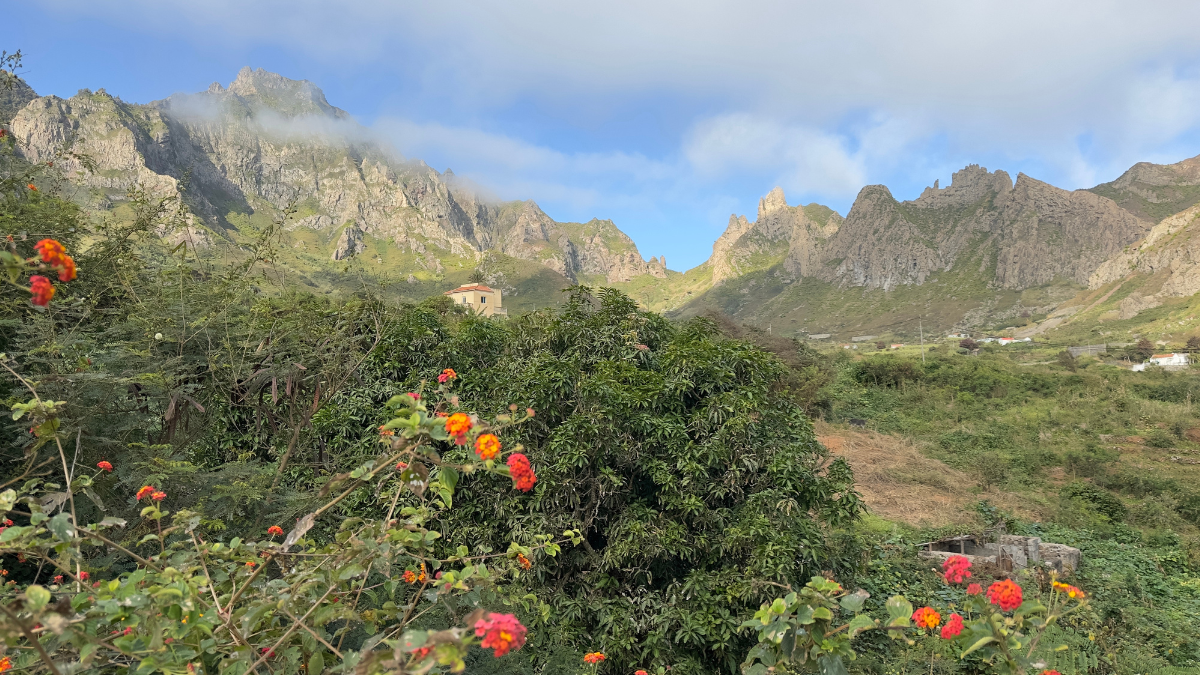
What are the chances of landing at the tiny airport of one of Cabo Verde’s least-visited islands and being welcomed by a spontaneous Carnival rehearsal? As we stepped out of the small arrival hall of São Nicolau Airport, a group of local percussionists was singing and dancing around the symbolic King and Queen of Carnival. It was an unexpected introduction to São Nicolau, a mountainous island in the northern Barlavento group often described as a quiet hidden gem for travelers seeking authentic, slow-paced nature and culture. This brief burst of energy was not staged for our group of 14 travelers — practically the only visitors on the island — but was a genuine rehearsal for locals preparing for the upcoming festivities. Before even setting foot on the trails of São Nicolau — an island still under the radar compared to Sal or Santo Antão — it became clear how deeply music is woven into the identity and the soul of Cabo Verde.
Read more about Cabo Verde:
~ Santo Antão: A Hiking Paradise
~ São Vicente: The Musical Land
Difficult to reach by boat because of often rough seas and a lack of ferries, São Nicolau is sometimes described as ‘Santo Antão from the old days’ — a reference to its better-known neighbor, already beloved by a loyal community of international hikers. To get there today, travelers rely on just a few flights from São Vicente or Santiago to Aeroporto da Preguiça, which can be suggestively translated as ‘Laziness Airport.’ “Local authorities are working to improve access to the island,” explained our guide, Maysa Duarte (also known as Maya), to our group of adventurous travelers, all of whom were excited for the privilege of exploring a place still untouched by the crowds.
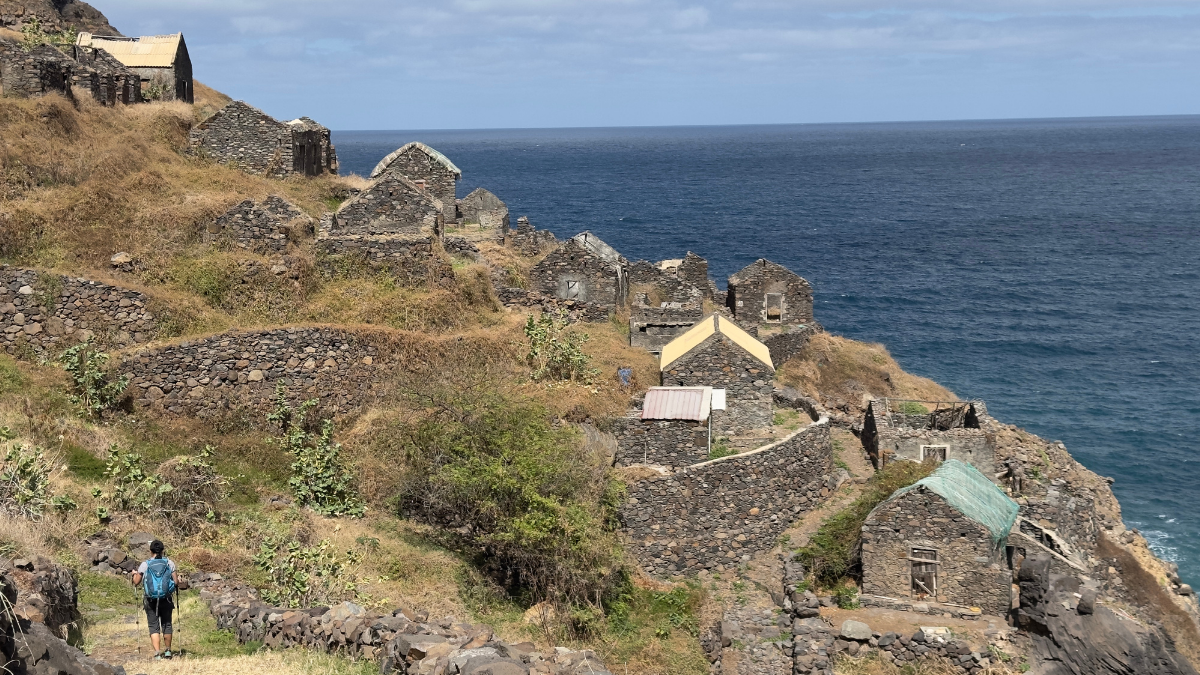
“This place is so unspoiled that you can walk the whole day without crossing a single person on the trail,” said my fellow hiker Cristina Núñez Costas, a Spanish tour operator from El Mundo Your Way. In fact, the second-largest island in the archipelago has a population density of only 33 inhabitants per square kilometer — ten times lower than on Santiago, the largest island and home to the capital, Praia. Cristina was almost right. On our very first day on the trail, from lush Fajã Valley to Praia Branca, we encountered exactly one tourist: a German hiker passing us in the opposite direction.
Dragon Trees and Cobblestone Trails
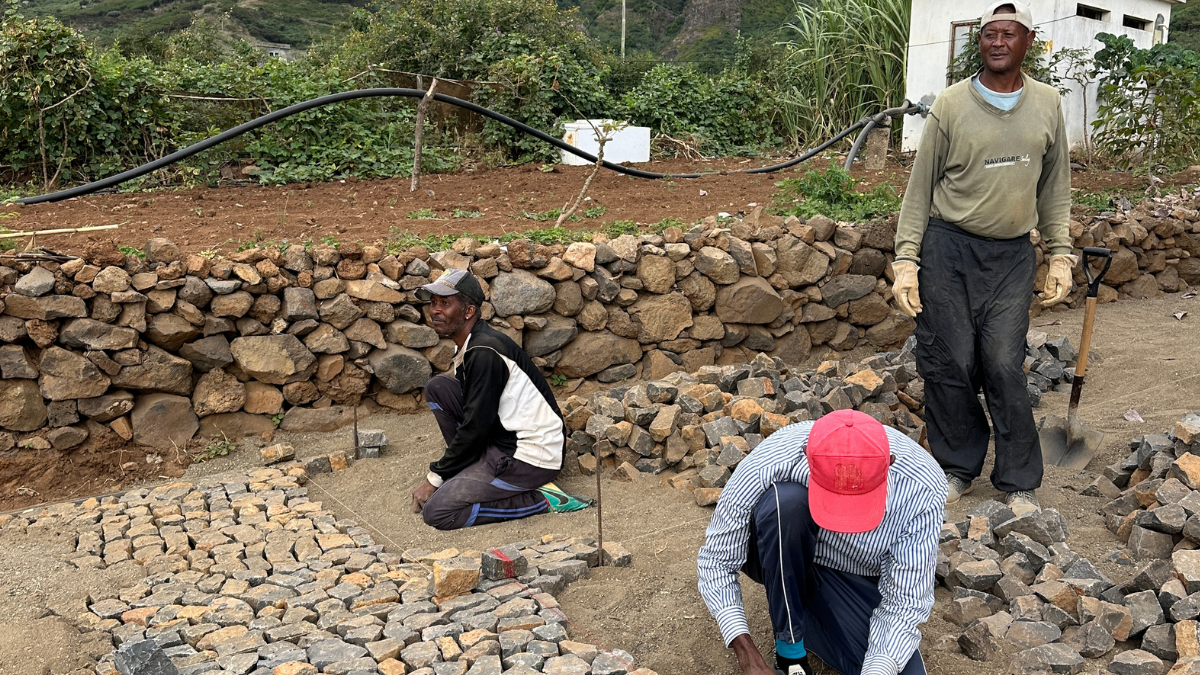
Fajã is famous for preserving the remarkable dragon trees (Dracaena draco), rare prehistoric botanical marvels with symmetrical, mushroom-shaped canopies. Yet our most striking first impression was not the trees — nor the giant spider webs stretching between rocks — but the meticulous restoration of the centuries-old cobblestone path itself, an elegant example of traditional engineering. “It’s amazing to see that it’s original — perfectly preserved and not built for tourists,” said my fellow hiker Davide Munari, an Italian tour operator from S-Cape Partners/SloWays. Local master masons we met along the way — yes, the usually deserted trail seemed unusually “busy” that day — explained how they still spend months carving and fitting basalt stones by hand to maintain the ancient routes, built originally to connect rural villages more than a century ago.
After a demanding climb of nearly 700 meters followed by a 1,000-meter descent, our five-hour, 7-kilometer trek concluded among the white, bucolic houses of Praia Branca. Here we visited the cozy Morna Museum. Though small — just two rooms filled with instruments and vinyl records — the museum pays homage to one of the island’s most celebrated former residents: Armando Zeferino Soares, composer of the iconic morna song “Sodade,” later made world-famous by the voice of Cesária Évora. “It’s incredible to see how art and music are part of everyday life here,” said Michelle Cheah, a passionate hiker from KE Adventure Travel in the United Kingdom. After the welcome carnival at the airport, it felt especially curious to find a music museum in such an isolated setting.
Limestone Cliffs Sculpted by the Sea
The surprises did not end there. After crossing, by minivan, a striking sandy desert dotted with goats along the island’s northwestern coast, we reached Carbeirinho — a spectacular coastal formation of limestone cliffs sculpted by wind and sea over thousands of years. It is considered one of the Seven Natural Wonders of Cabo Verde, along with the island’s dragon trees. On the way back to Ribeira Brava — where we stayed in modest, family-run guesthouses that have yet to cater to international tourism — we paused in the fishing village of Tarrafal de São Nicolau for a refreshing swim in the mid-Atlantic.
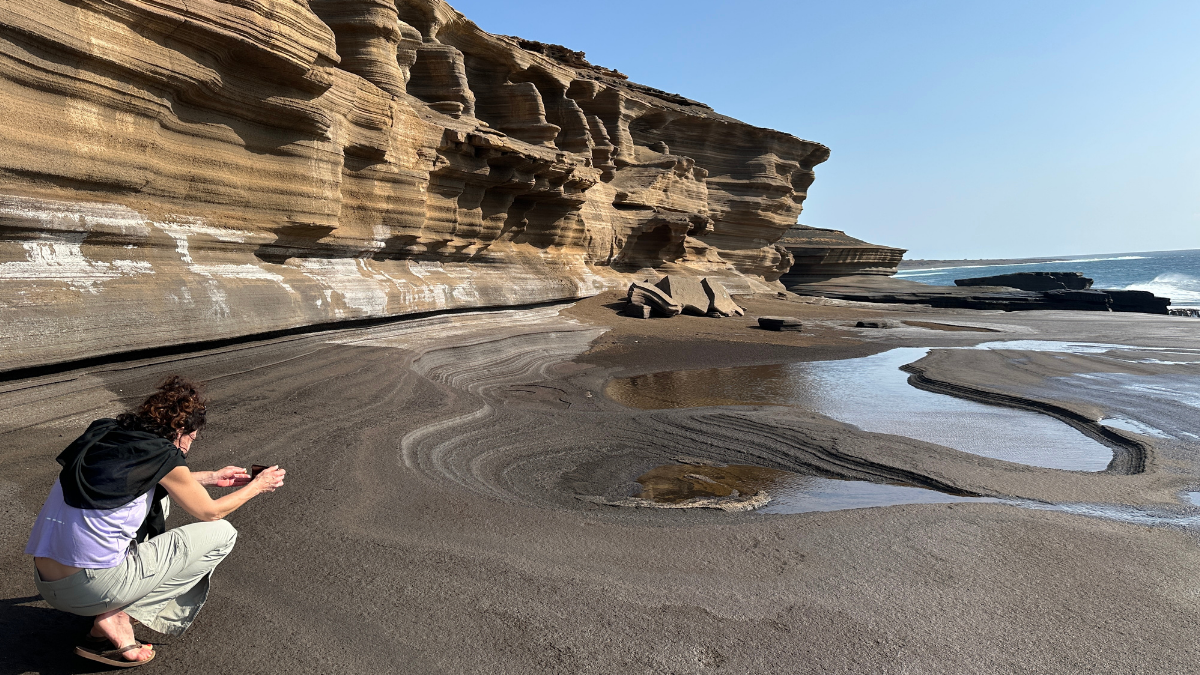
Both towns — the island’s two largest — still preserve elegant colonial buildings from the 19th and early 20th centuries, including aristocratic sobrados, or manor houses. They date from a time when Ribeira Brava hosted a respected seminary-lyceum for priests and intellectuals, and Tarrafal thrived as one of the archipelago’s most important fishing and tuna-canning centers. A local fishing museum still displays old-fashioned tuna cans from that era.
While the coast of São Nicolau is largely arid, the mountainous interior can be shrouded in mist, creating a surprisingly lush ecosystem rich in endemic plants rarely found on the flatter islands. Part of our group experienced this dramatic microclimate the following day in Monte Gordo Natural Park, which protects the island’s highest point at 1,312 meters. “This is what makes hiking in Cabo Verde so special,” said U.S. tour operator Jess Fontaine from National Geographic–Lindblad Expeditions. “There’s an incredible diversity of landscapes and difficulty levels, so routes can easily be adapted for different types of travelers.”
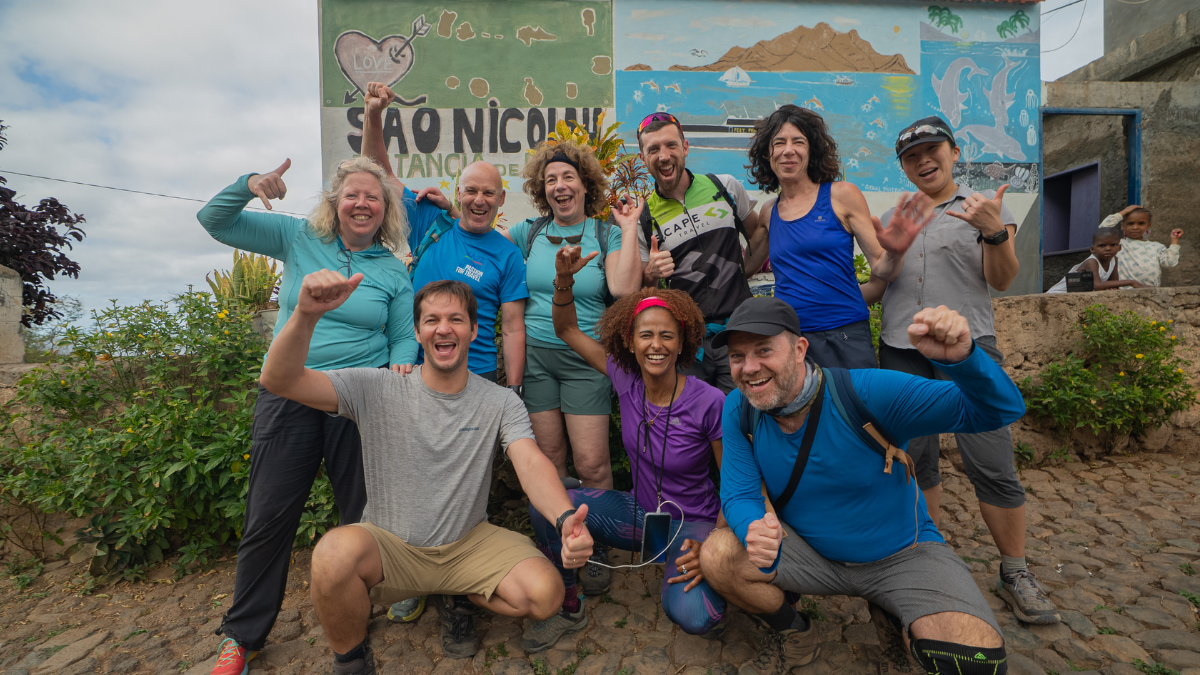
The Heaven Amphitheater
But the grand finale — and probably the most challenging hike of our trip — was the dramatic trail from Covoada to Ribeira Funda. Along this rugged 10-kilometer route, elevation changes of 1,200 meters up and 1,600 meters down carry hikers from humid green slopes into stark volcanic terrain. In some sections, hexagonal basalt columns — geological signatures of the archipelago’s volcanic origins nearly 20 million years ago — rise dramatically from the landscape.
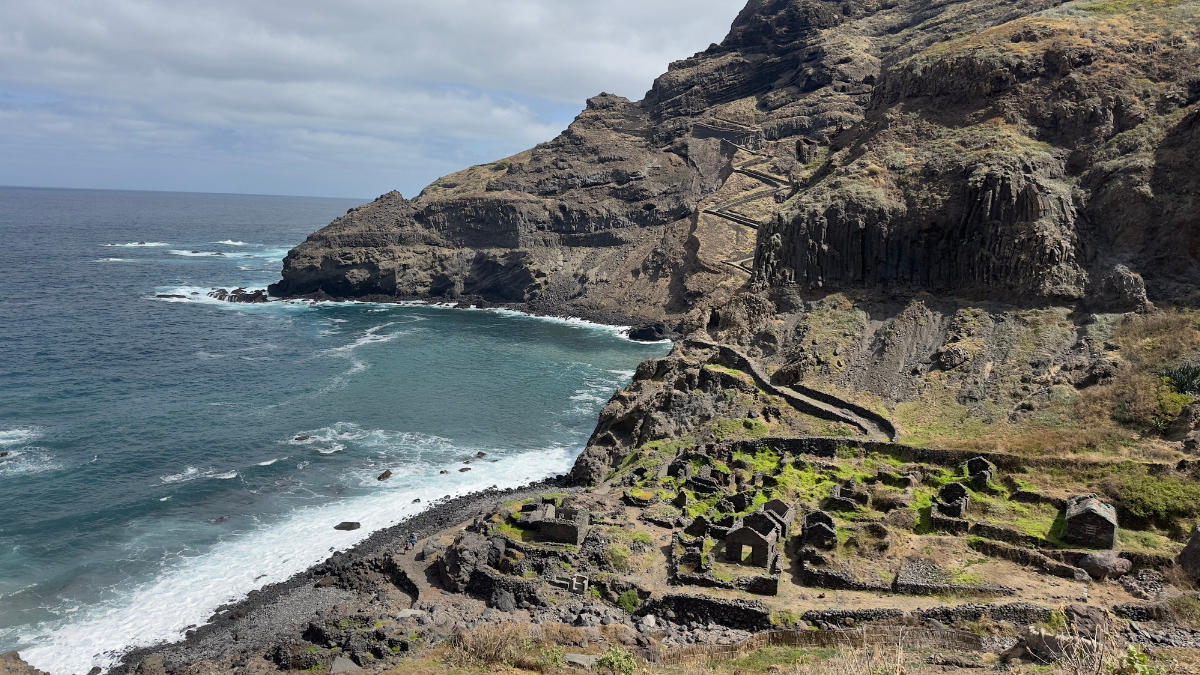
My favorite moment came when the rocky volcanic canyon walls suddenly opened to reveal an immense Atlantic horizon. The upper half of the scenery was just the clean blue sky above our heads, while the lower half was the sea. Below us lay the abandoned village of Ribeira Funda, its scattered houses clinging to the valley floor like a forgotten Machu Picchu overlooking the ocean. Reaching the Atlantic breeze there felt like a reward after the demanding, dry hike. Of course we were tired — but exhilarated rather than exhausted. The final ascent, this time accompanied by sweeping views of the Atlantic, carried us toward the peaceful village of Estância de Brás.
Forever Sodade
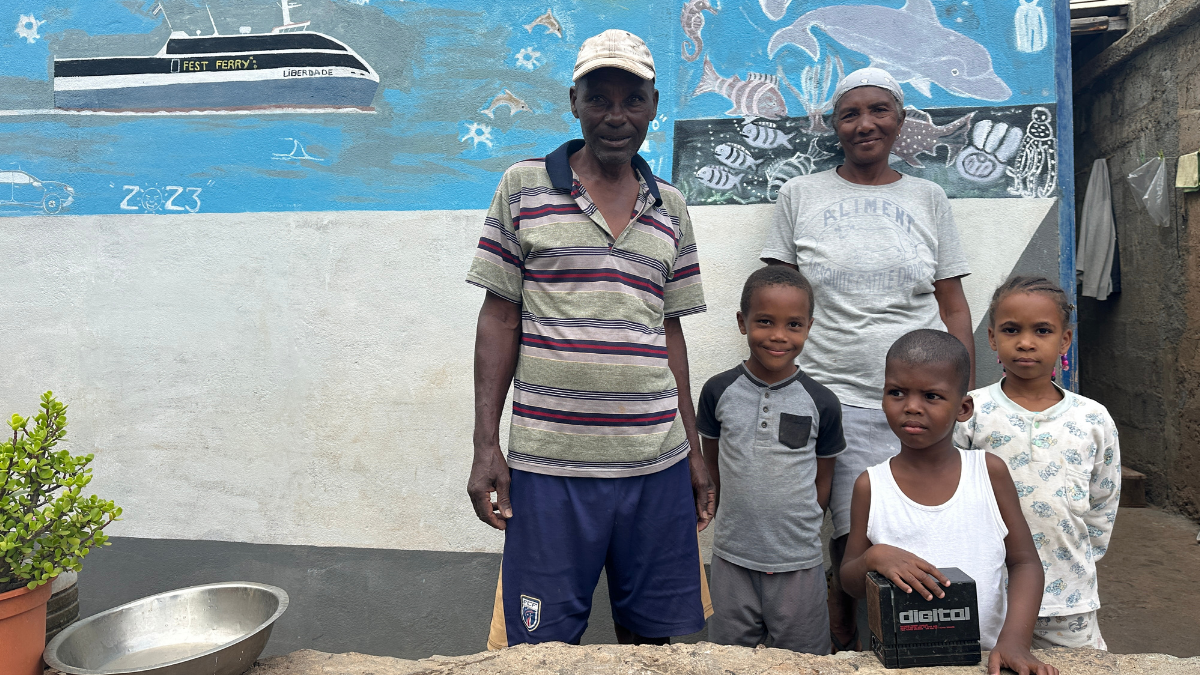
In front of a single house at the end of the trail, we had the chance to understand the story behind that intriguing, nearly abandoned village with Teodoro Vicente and Ana Ramos. Like many families in the valley, the couple called Ribeira Funda home until the 1970s. “We loved living there, but everyone was forced to move away after a devastating flood,” said Teodoro. “Hoje sentimos saudades de lá,” added Ana in Portuguese. They meant they still miss the place, using the word that captures a deep sense of longing and nostalgia: saudade. In Cabo Verdean Creole, the variation sodade became world-famous through the voice of Cesária Évora.
That word came back to us when we were leaving the country after several intense and happy days exploring São Nicolau and its sister islands. When we were already at the international airport, our guide Maya suddenly appeared in the boarding area with three musician friends from Nobai, our host tour operator, carrying their instruments. In a touching farewell surprise, she began singing “Sodade,” the song through which Cesária Évora immortalized the soul of Cabo Verde.
About the Storyteller
Writer & Photographer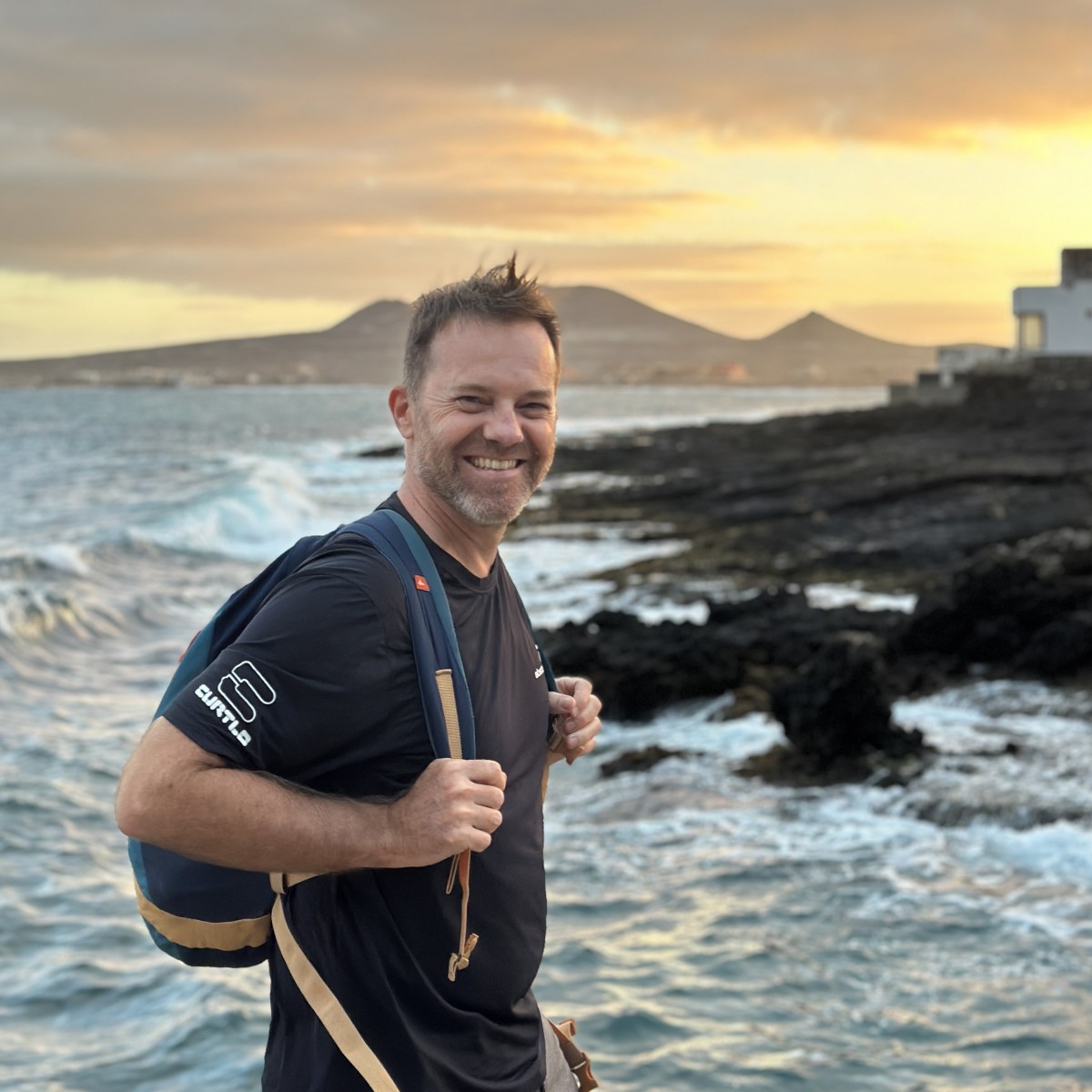 Travel writer Daniel Nunes specializes in human stories focused on conscious adventure and cultural diversity. He served on the ATTA Storytelling Team for the Adventure Travel Cabo Verde series in February 2026. Check out his website at danielnunes.co and follow him @danielnunes.co on Instagram.