Somewhere over the Atlantic, between the coast of West Africa and the edge of nowhere, a voice in my headphones whispered of morabeza — a feeling that only exists in one place on Earth.
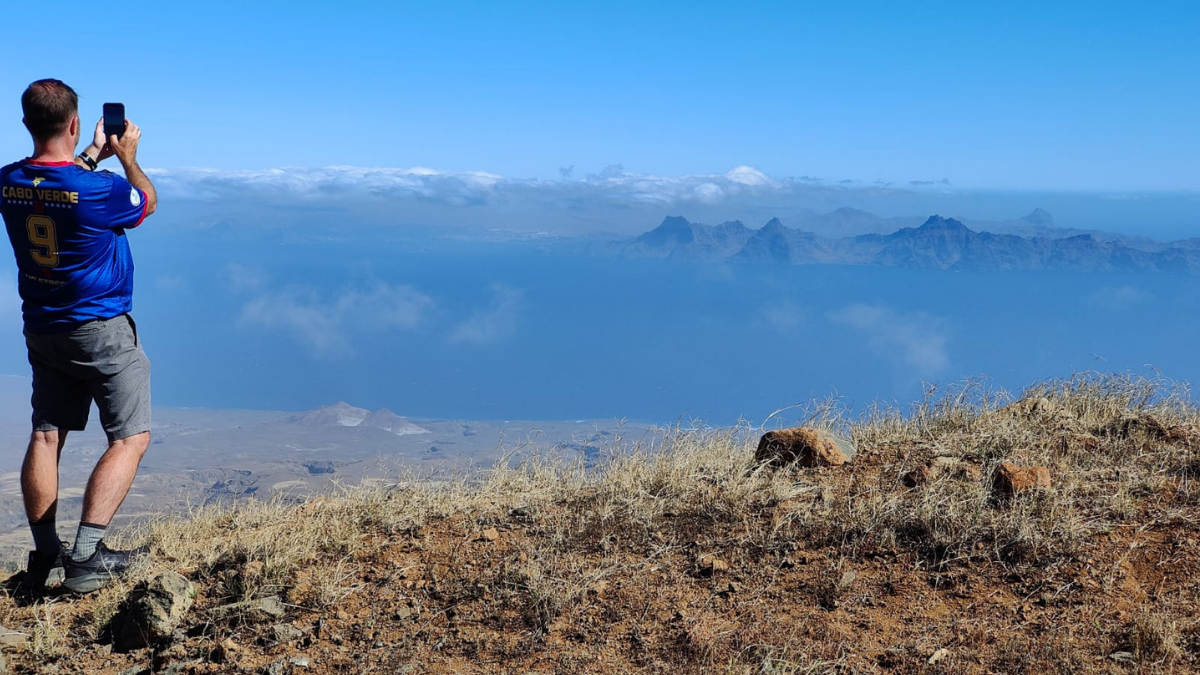
Morabeza di nha terra
É um doce mel di nôs harmonia
I am about to land in the Cabo Verde archipelago, looking out of the plane window at the three astonishing volcanic mountain islands that I will explore over the next few days, when national-star singer Cesária Évora sings through my headphones something like:
The morabeza of my land
Is the sweet honey of our harmony
After a short four-hour flight from Lisbon, in Portugal, it feels poetic to approach this little country off the coast of West Africa in the middle of the Atlantic Ocean — a place I’ve been dreaming of visiting for so long, enchanted by the powerful voice of the singer who put Cabo Verde on the musical map of the world.
It doesn’t take long for the plane to touch down on São Vicente Island before I begin to grasp the mysterious meaning of morabeza, that Creole word Cesária was singing — a word that exists only here. Local tour guides Francisca dos Reis, nicknamed Txika, and Maisa Duarte, known as Maya, from Nobai trekking agency, welcome our small group of 14 adventure travelers with such warmth — hugs, wide smiles, and easy laughter — that I quickly suspect Cabo Verdean morabeza has something to do with open-heartedness, a relaxed spirit and genuine hospitality. It is a pleasure to finally meet you, Cabo Verde!
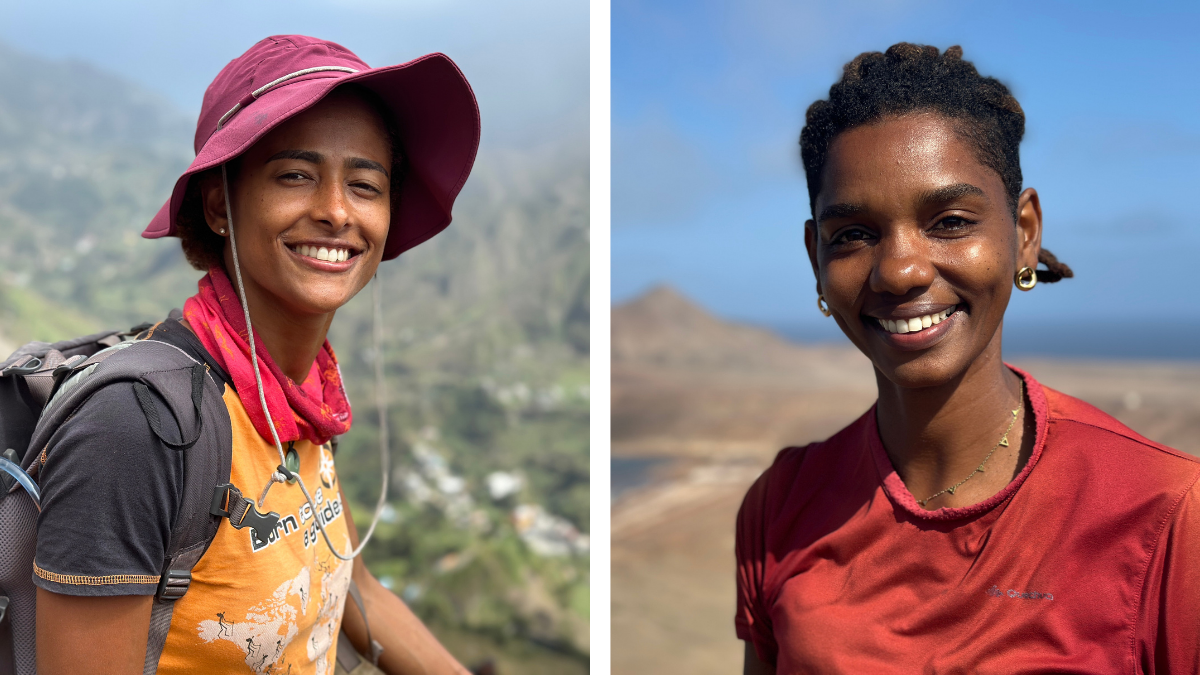
“Welcome to Mindelo, the capital of São Vicente Island, the cultural hub of Cabo Verde and hometown of Cesária Évora,” says Txika. “You will soon start noticing that this country is much more than our famous islands with sunny white-sand beaches.” She is referring to the resort islands of Sal and Boa Vista, which hosted 78.5% of all international travelers to the archipelago in 2025.
Starting Point to World-Class Hiking
In fact, we are here for another purpose: discovering some of the best hiking trails in the world. Even though we are meeting for the first time, our entire group is made up of international nature lovers far more interested in active journeys, wild landscapes and hikes along off-the-beaten paths. Attracted by ancient stone-paved trails zigzagging up and down volcanic peaks and precipitous coastal cliffs — and connecting remote mountain villages that drop sharply toward the Atlantic — we came to explore these still under-the-radar trails, especially in Santo Antão and São Nicolau. Only recently have they begun to be promoted by ITCV (Cabo Verde Institute of Tourism), after a strong collaboration with the Adventure Travel Trade Association (ATTA), as part of a strategy to diversify the country’s tourism offer with focus on small-scale sustainable tourism.
Read more about Cabo Verde:
~ Santo Antão: A Hiking Paradise
~ São Nicolau: The Next Frontier
Seen from the air, this ten-island country looked similar to other volcanic archipelagos such as the Canary Islands, Madeira and the Azores — the much more touristic neighbors in the central Atlantic. On land, on the way to the hotel, the atmosphere reminds me I am stepping into Africa. But at the same time, after visiting a handful of countries in continental Africa — mostly for safaris — my first impression is that this is a different Africa. An Africa without lions. A relaxed, stress-free Africa. An Africa with no major political turbulence — and one that breathes music.
Nature, Music, Football & Local Food
Once I began exploring the country — a journey initially planned for four islands in ten days, but which I couldn’t resist extending to six islands in twenty — I realized Txika was right. Cabo Verde’s islands are remarkably diverse, each with its own geographical character and cultural highlights, yet all sharing something essential: warm hosts. The most memorable moments are those shared with locals. Even better when they unfold in places tied to Cabo Verdean pride: in the middle of biodiverse landscapes, in bars with live music, during a football match — especially after the country qualified for the 2026 World Cup — or simply around a table filled with food, drinks and stories.
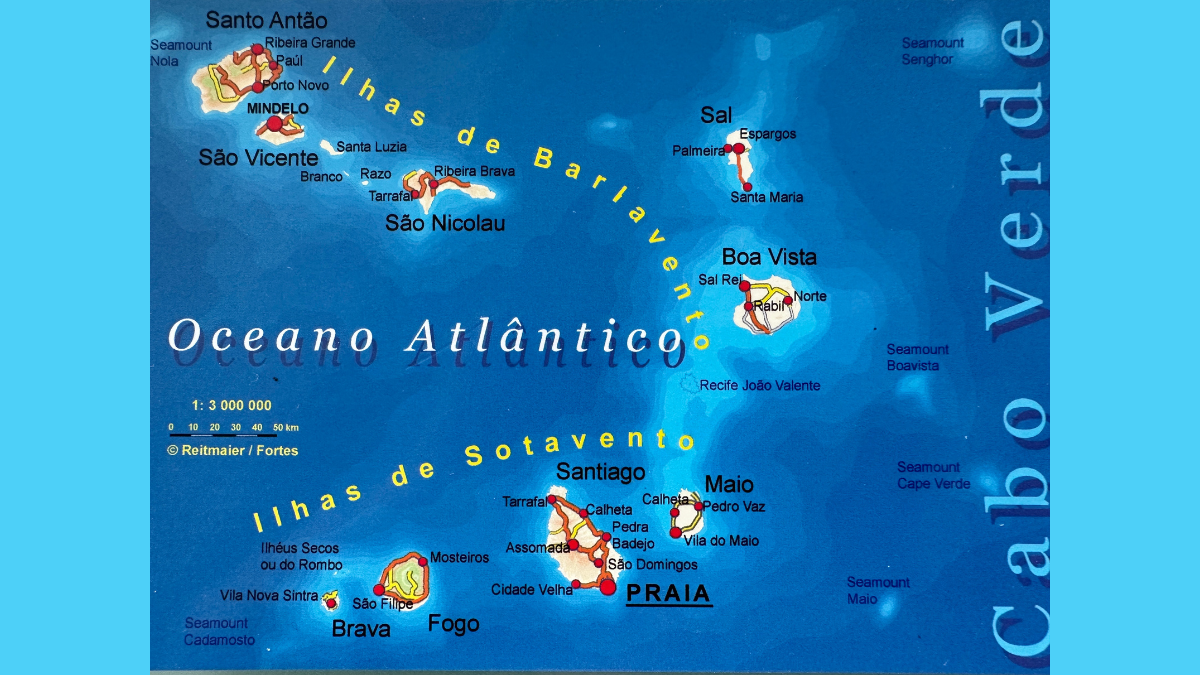
Only when Txika and Maya unfold the map of the archipelago do we begin to understand the particularities of each island:
- Our main goal is to explore the mountainous northern islands — the Barlavento group: São Vicente, Santo Antão and São Nicolau. Uninhabited Santa Luzia and the beach islands of Sal and Boa Vista are also part of Barlavento.
- The biggest and most populated island is Santiago, in the southern group known as Sotavento, where the capital Praia is located and where more than half of the country’s population of 600,000 people lives. The islands of Maio, Brava, and Fogo also belong to this southern cluster.
- Fogo Island is home to the country’s highest point (2,829 meters or 9,281 feet): the Fogo Volcano — a demanding adventure for intrepid hikers. It is the only island in the Sotavento region that regularly appears on the preferred routes of adventure travelers.
Following the Steps of Cesária Évora
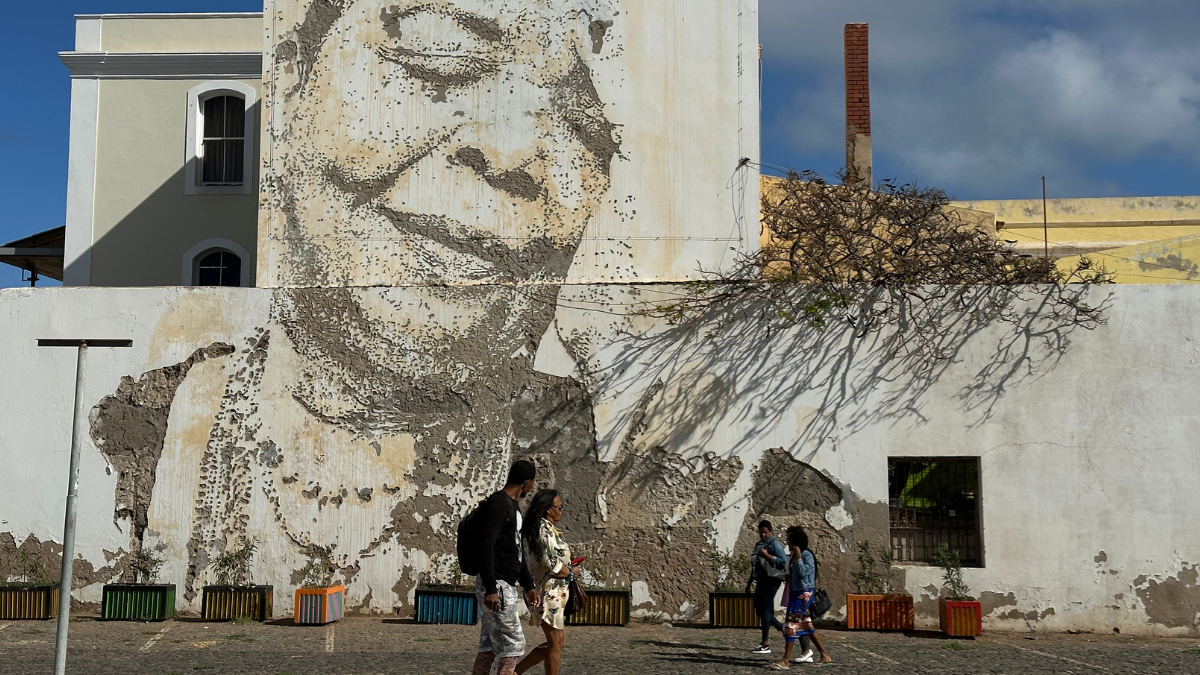
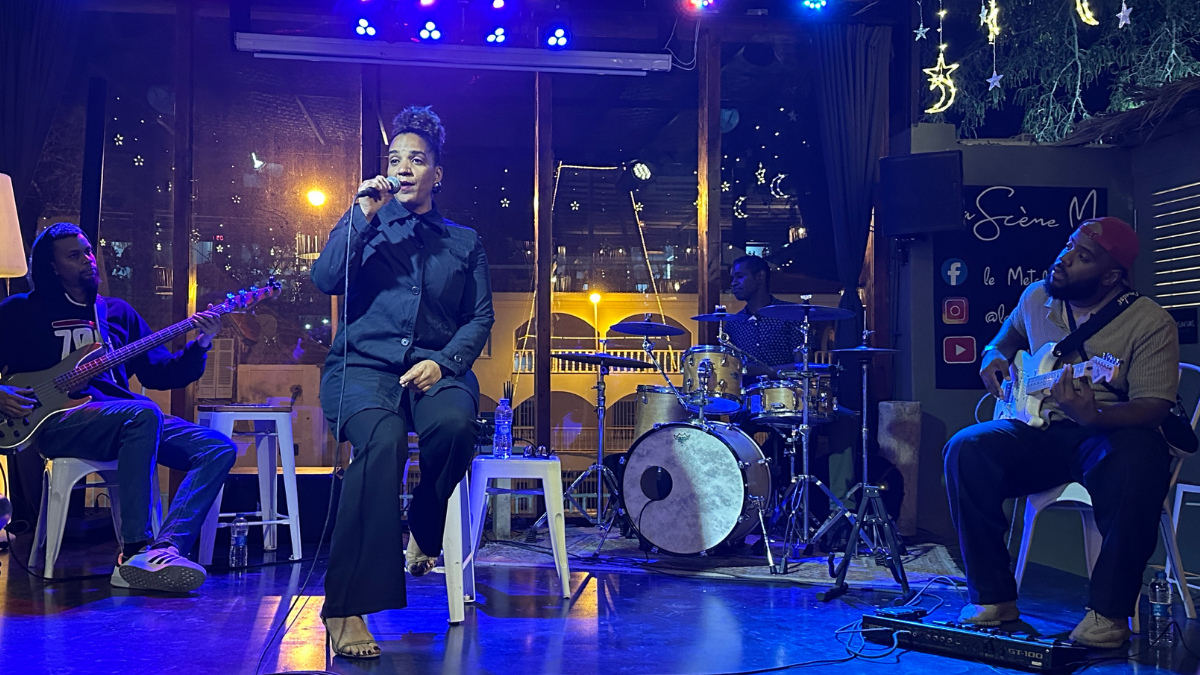
With a striking mountain range that had already caught my attention from the plane even before landing, São Vicente is the strategic base for exploring the northern islands. Mindelo, the country’s second most populated city (around 71,000 people), is the cultural heart of a nation deeply in love with music. We could enjoy live concerts in restaurants and bars every single night. Many of these venues still display photos from the days when Cesária Évora (1941–2011) used to perform there. Two very simple museums and her tomb in the local cemetery can also be visited.
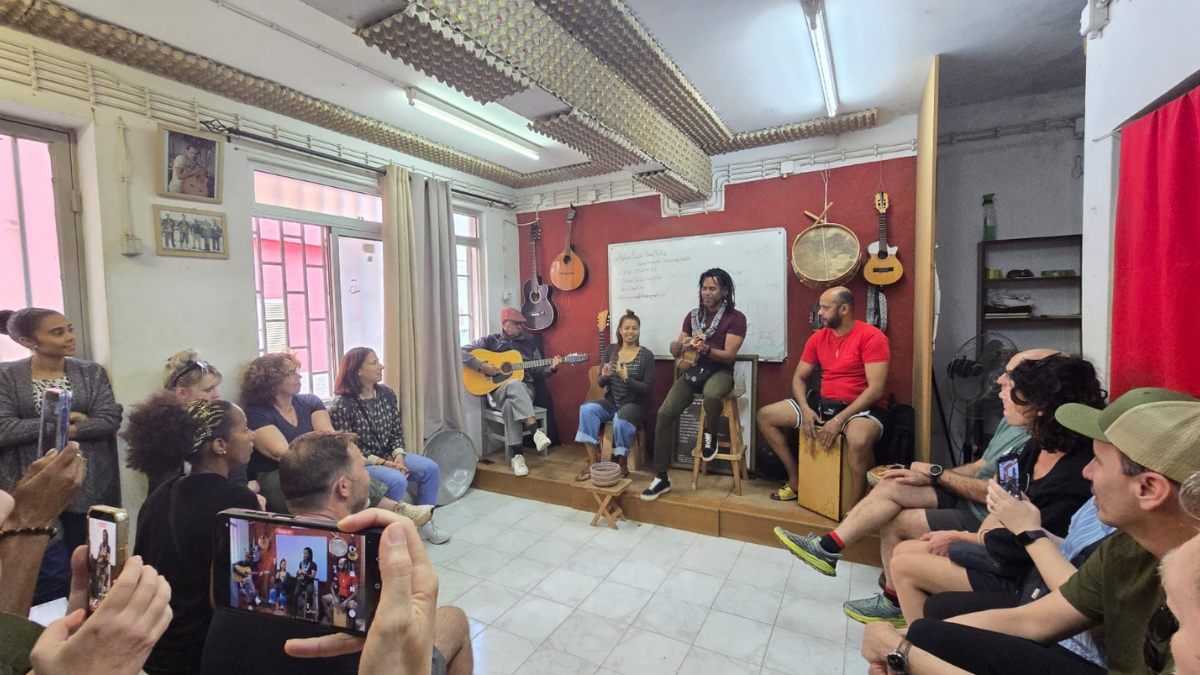
A particularly memorable experience is scheduling a visit to the atelier of musician and luthier Luís Baptista, where travelers can enjoy an intimate introduction to local rhythms such as morna, coladeira and funaña. “Following the legacy of my father, João Baptista, it has been 20 years since I opened this place where I study music and build instruments for some of the best artists in the country,” he told us, before presenting a short, pocket-size concert exclusively for our group. “It is wonderful to discover the islands through their music, their stories and their anecdotes,” said German journalist Malte Clavin, who was traveling with us. We had lots of fun singing along and clapping our hands.
Heritage of a Portuguese Africa
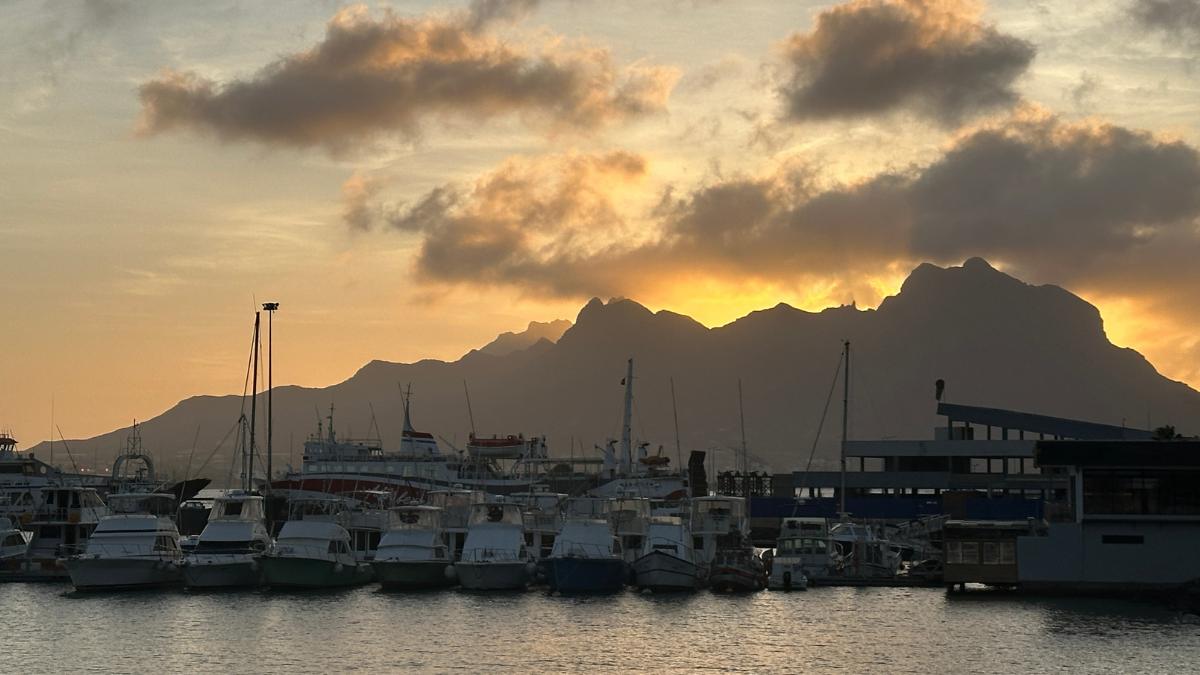
Besides the official Portuguese language, Mindelo’s historic downtown preserves many colonial buildings dating back to the period when the country was a colony of Portugal. In the beginning, in 1460, none of the islands were inhabited. Because of its strategic position between Africa — Senegal is only 570 kilometers (350 miles) away — and the Americas, Cabo Verde would later become a logistical hub in the infamous transatlantic trade of enslaved Africans between the 16th and 18th centuries. Recently renovated, Porto Grande in Mindelo is today the country’s main port and the gateway for cruise ships and for the ferries that connect São Vicente with Santo Antão, right in front.
Morabeza and Local Vibes
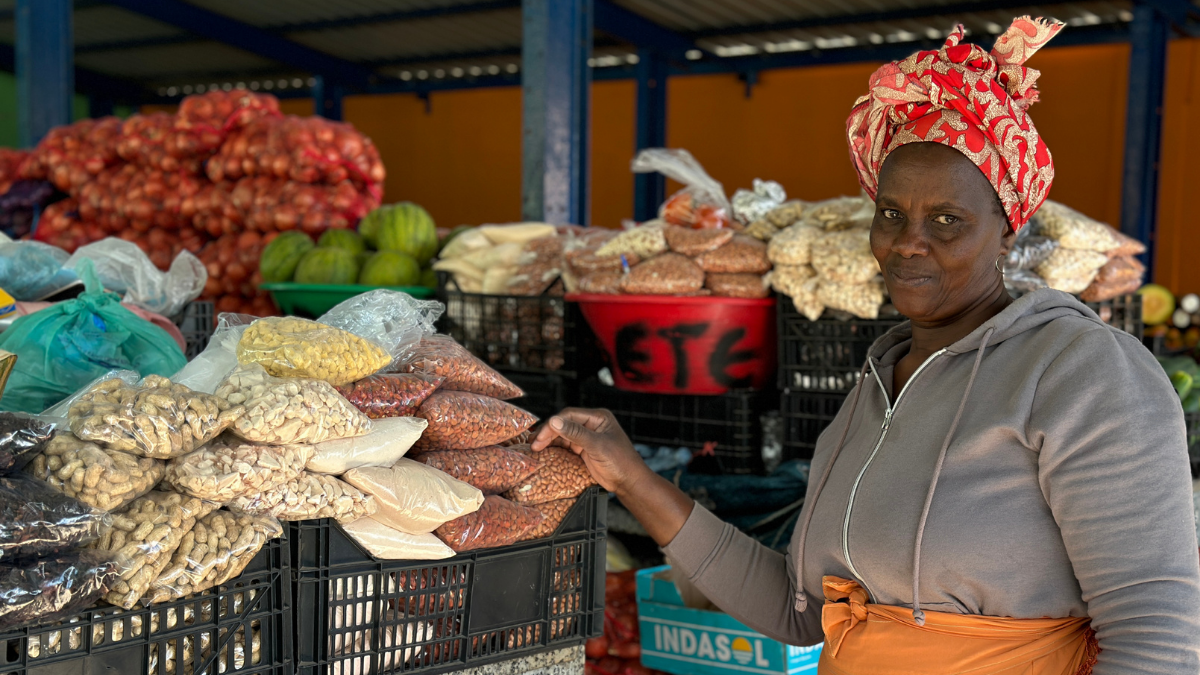
But one can’t leave São Vicente without enjoying some of its own natural and cultural highlights. A scenic drive to Monte Verde offers 360-degree sweeping views from the island’s highest point, at 774 meters (2,540 feet), with its volcanic coastline, white sand beaches and beautiful Mindelo Bay. A slow walk through downtown is perfect for discovering local artists’ ateliers and meeting friendly faces at the Fish Market, the two vegetable markets and the African market — filled with colorful clothes and handicrafts — all just a few blocks apart. We were also surprised to find some local sun-and-beach options, even without the glamour (or the tourists) of Sal and Boa Vista.
Laginha Beach, right in the city, is the social heart of Mindelo, where locals come to exercise, swim or gather at a few relaxed beach bars. São Pedro Bay — easily reached by bicycle or e-bike — is famous for its sea turtles. A short road trip took us to Salamansa, dotted with kitesurfers, while nearby Baía das Gatas seemed to be quietly waiting for the next edition of its famous music festival. And in Calhau, a small fishing village, we watched a spectacular sunset slowly close the day. Little by little, I was beginning to feel “the sweet honey of local harmony” that Cesária sang about when I first arrived in this musical country.
About the Storyteller
Writer & Photographer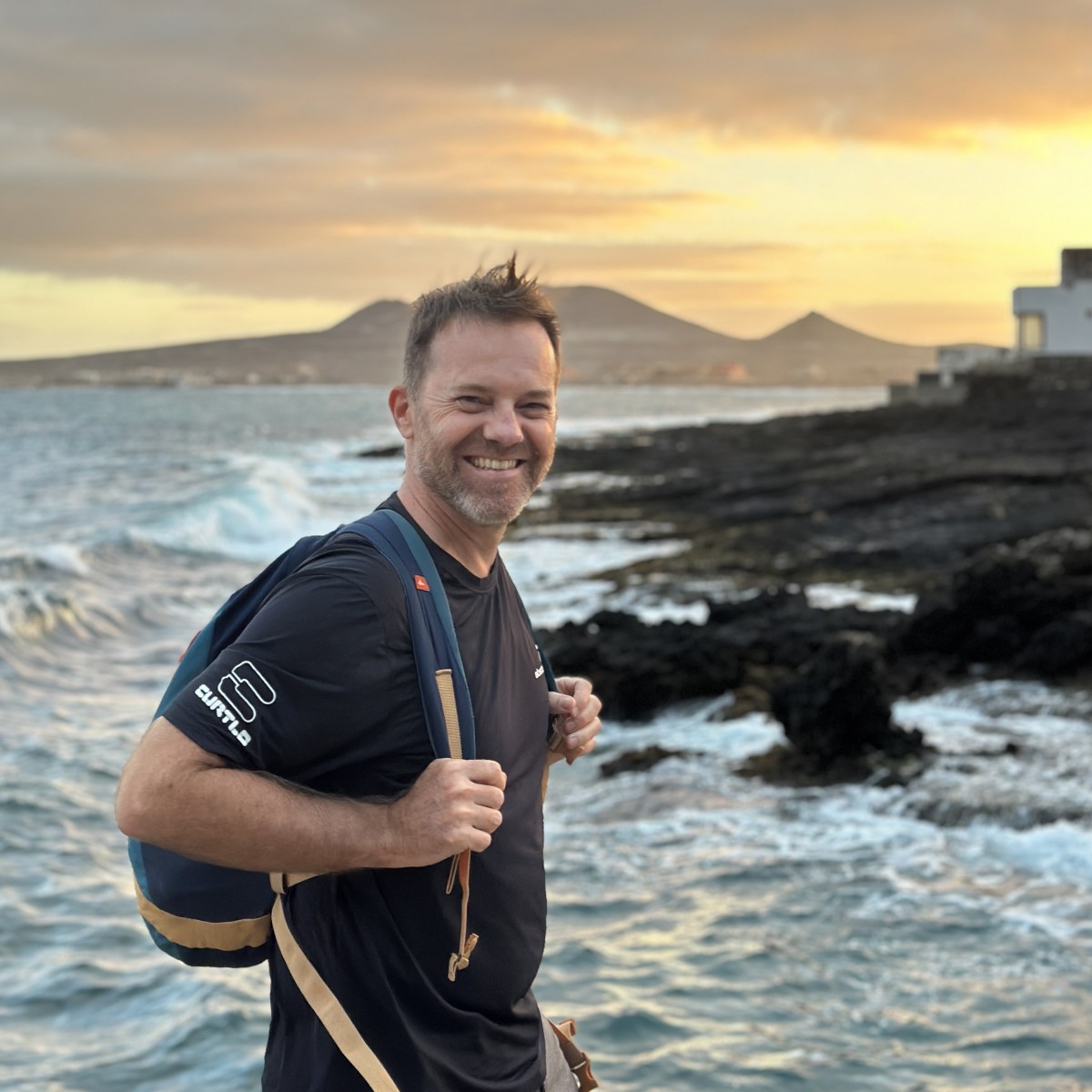 Travel writer Daniel Nunes specializes in human stories focused on conscious adventure and cultural diversity. He served on the ATTA Storytelling Team for the Adventure Travel Cabo Verde series in February 2026. Check out his website at danielnunes.co and follow him @danielnunes.co on Instagram.